
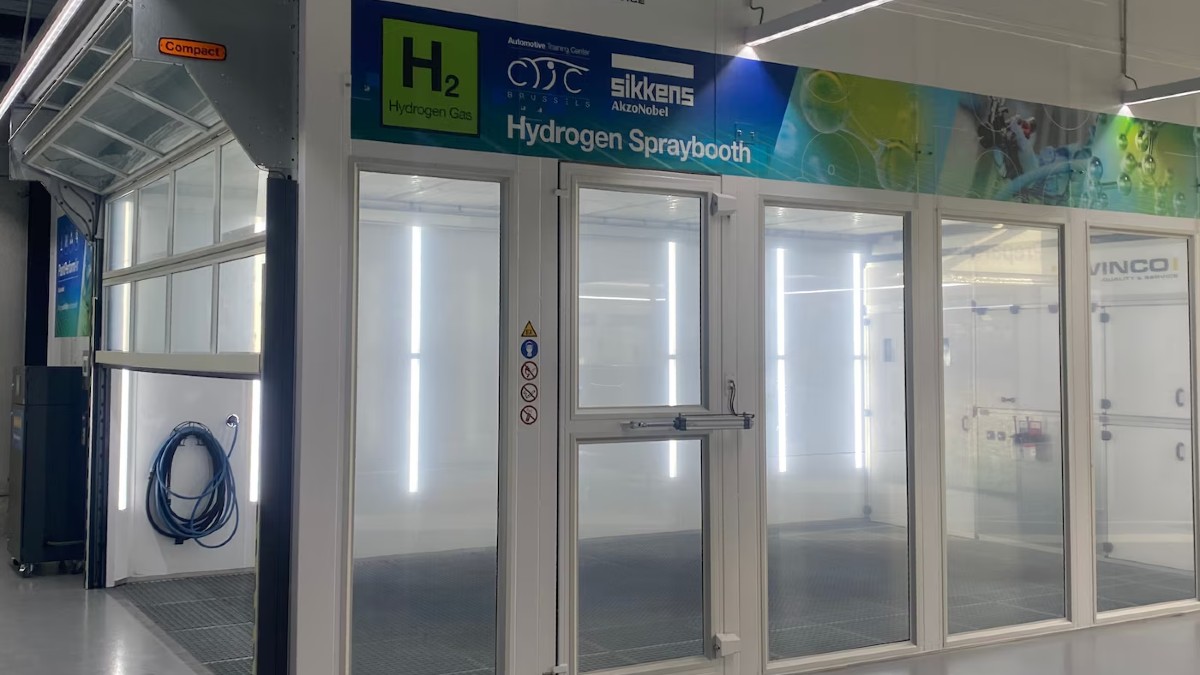
International. In a key step towards sustainability in the automotive industry, AkzoNobel has installed one of the first hydrogen-powered paint booths at its new training center in Belgium, near Brussels.
This cabin is part of the expansion and modernization plan of the company's global network of training centers, which includes more than 40 facilities dedicated to automotive training.
The cabin, which stands out for its use of hydrogen as an energy source, responds to the growing demand for cleaner and more efficient technological solutions in the automotive sector. In fact, the Belgian centre, which has been expanded by 30% compared to the previous one, has been designed to meet the highest standards of sustainability, obtaining BREEAM certification, one of the most prestigious seals in green construction.
Patrick Bourguignon, Head of AkzoNobel's Automotive and Specialty Coatings business, underlined the positive impact of this technology: "By integrating this hydrogen-powered paint booth, we not only innovate in processes, but also empower the next generation of professionals to be at the forefront of the transition to a more sustainable automotive industry. This facility reduces carbon emissions, improves energy efficiency and optimizes drying times, key elements for the future of automotive paint."
Not only is the booth designed for traditional painting jobs, but it includes an all-in-one workstation for repairs and an advanced filtration system to reduce volatile organic compounds (VOCs) and purify the air by 99%, improving working conditions and environmental impact.
AkzoNobel's Automotive Training Centers (ATCs) aim to train professionals in the sector in the latest coating technologies and processes. Training programs range from applications and products to new processes such as digital color and electric vehicle repair, opening up a range of opportunities for body shops and OEMs.
"These centers not only teach traditional painting techniques, but also prepare technicians to meet the challenges of new-generation vehicles, such as electric vehicles," added Bourguignon. "With the growing skills shortage in the industry, our ATCs are positioned as strategic hubs to develop talent and set a new standard in sustainable coatings practices."
This new training center with a hydrogen-powered paint booth not only reinforces AkzoNobel's commitment to sustainability, but is also a clear example of how innovation can accelerate the transition to a more efficient and less polluting automotive industry. The company aims to reduce its carbon emissions across its value chain by 2030, and this investment in technology is an important step on that path.