
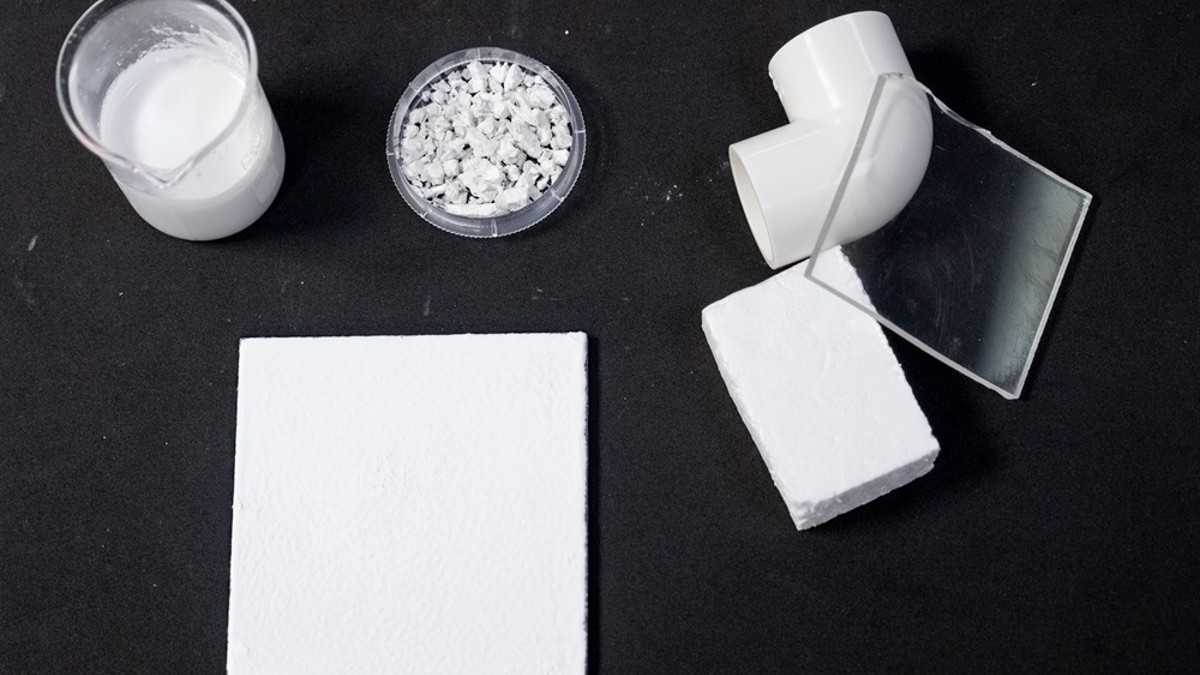
International. A research team from Nanyang Technological University (NTU) in Singapore has successfully developed new methods to create a type of "cold paint" using recycled plastics (acrylic, old PVC pipes and Styrofoam) and barium sulphate, offering a sustainable and efficient alternative to new plastics.
The researchers' methods not only help cool temperatures in tropical environments, but also contribute to effective plastic waste management.
In the first method (sol-gel), the research team used recycled plastics and mixed them with barium sulfate (BaSO4) to create their fresh paint.
A 24-hour test on the roof of a building in Singapore showed that the newly created cladding can reach 1.2°C below the surrounding air temperature when exposed to direct sunlight. At night, the layer could reach 3°C below room temperature. The coating can reflect approximately 97.7% of sunlight and emits 95% of its heat in the infrared band.
In a second method (phase inversion), the team also used recycled plastics and barium sulfate to make the cold paint, but focused on making the recycled plastics porous by creating small air-filled holes during the production process. This is because the pores in the air help scatter sunlight along its entire spectrum.
The results showed that surfaces coated with this version of paint could almost match the temperature of the surrounding air at midday and reach a nighttime temperature of 2.5°C below ambient temperature.
Cold paint developed using both methods outperforms commercially available cold paints that typically cannot bring surface temperature below ambient.
Further research using a mixture of unsorted plastic waste (acrylic mixture, PVC pipes and Styrofoam) also showed that the results were comparable to those of cold paints developed using a single type of plastic waste. This suggests that the NTU team's approaches reduce the need to sort different types of plastic.