
International.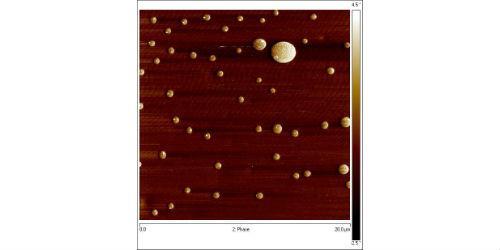 Researchers from the University of the Basque Country (UPV/EHU) modify surface properties of materials to obtain certain properties at a lower cost.
Alexander Santiago, a researcher at the Department of Polymer Science and Technology of the Faculty of Chemistry of the UPV/EHU, has developed three types of functional coatings with resistance to microorganisms, with self-cleaning and anti-reflective properties. By modifying the surface of the paints, it has managed to vary their properties or their possible applications, at a lower cost, compared to the materials that exist in the market.
Coatings or paints are materials applied on different surfaces for fundamentally decorative and protective purposes. However, today the market for these materials is being subjected to increasingly severe specifications. Current coatings must, in addition to being decorative and protective, impart other additional properties such as, for example, low adhesion to microorganisms, ease of cleaning or self-repairing properties. The development of this type of materials, known under the name of "functional coatings", requires the control of both the physical (mainly morphology) and chemical properties of the surfaces generated.
Alexander Santiago's research has aimed to make a contribution to the development of three types of functional coatings that provide the same resistance to microorganisms (for example, for boat paints), self-cleaning properties (hydrophobic paints) and anti-reflective properties (for coatings of mobile screens or glasses lenses).
Following the thread of other research carried out by both members of the research group and members of a research group of IBM Almaden Research Center San Jose in the United States, the researcher carried out multiple tests and tests, in the three lines mentioned above, to obtain functional materials with the desired properties.
The first of the hydrophobic coatings he explored was a type of copolymer that results in spontaneous phase separation between its components. That is, "one of the components of the copolymer (polyurethane) confers adhesion to the substrate and most of the other component (siloxane) remains on the surface, which generates greater roughness, and as it is also hydrophobic prevents the adhesion of organisms", explains Alexander Santiago. Through various measurements, they found that the hydrophobicity of the system depended more on roughness than on the concentration of siloxane on the surface. The restriction on the adhesion capacity of microorganisms from these films was determined using protein adsorption measurements. These tests showed that the adhesion of the microorganisms was lower in the films obtained that presented phase separation.
To obtain materials that presented a self-cleaning effect, within the line of hydrophobic coatings, inorganic nanoparticles of a hydrophobic nature – specifically, silica nanoparticles with organic coating – previously synthesized, in acrylic polymers, were introduced by various methods. The best results were obtained by spraying these nanoparticles on acrylic films, and thus a superhydrophobic surface was generated, with very good self-cleaning properties, in addition to a high resistance. The method used "has turned out to be a fast and relatively inexpensive method," says the researcher, "since we use silica that is not as expensive as other substances used in the market."
To obtain anti-reflective characteristics, the films must have a refractive index lower than that of the substrate, which can be achieved by introducing porosity into them. But the presence of pores means that anti-reflective surfaces do not have adequate mechanical properties for processing. In that sense, he studied the porosity/resistance relationship with respect to the refractive index obtained, and obtained promising values.
According to the researcher, "there is still work to be done, because, for example, the nanoparticles are not quite well grasped and because the final film with the nanoparticles is not as consistent as we would like". With regard to the copolymers studied in relation to biological anti-pollution properties, "the previous results are quite promising," he adds, "and can be extrapolated, but the problem is that we work at the laboratory scale." Finally, the researcher explains that the issue of anti-reflectives was only the beginning of an investigation, and "we are still improving it".
Source: www.ehu.eus