
Chile.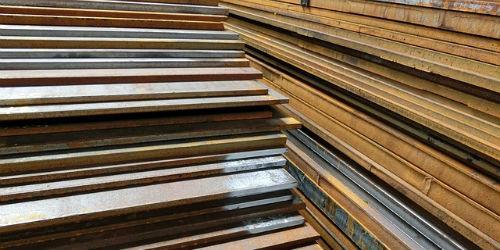 Academics from the Pontifical Catholic University of Valparaíso are carrying out the innova Corfo 13bpc 3-19083 project called "Protocol for the selection of paint schemes, used in the protection against atmospheric corrosion of steel".
The dean of the Faculty of Sciences of PUCV, Rosa Vera, explains that the project aims to develop protocols for the optimal selection of structural steel paint schemes for their protection against atmospheric corrosion in areas of high environmental corrosivity in Chile.
To meet this objective, he points out, carbon steel samples are analyzed with different schemes of industrial and marine paints that are evaluated in atmospheres cataloged according to different degrees of corrosivity. The 13 stations are located in Arica, Iquique, Tocopilla, Antofagasta, Huasco, Los Vilos, Quintero, Concón, Coronel, Puerto Montt and Antarctica.
This initiative, he says, is the continuation of another initiated in 2009, where a Corrosion Map of Chile was elaborated from the measurements made in 31 atmospheric stations located in different parts of the country, and in which studies were carried out on materials such as copper, galvanized steel, aluminum and carbon steel.
On this occasion, these 13 stations were selected, where a greater aggressiveness towards steel was observed. At each measuring point, specimens with different paint schemes were installed, which are collected every six months.
As explained in the PUCV, in the methodological field, the deterioration of unpainted steel is evaluated by measures of mass loss in triplicate.
Painted steel is evaluated by the Electrochemical Impedance Spectroscopy (EIE) technique at baseline and every six months. Thickness, adhesion, porosity, blistering and degree of deterioration are measured. At the same time, the samples will be evaluated in the Salt Spray Chamber, an accelerated test, using the same analysis methodology.
According to the specialist, "in itself a corrosion process is a transfer of electrons. The presence of a protective layer of paint on the metal adds additional corrosion resistance. This can be represented in an equivalent circuit in order to evaluate the protection induced by the paint," says Professor Rosa Vera.
In turn, among the meteorological variables that are analyzed are relative humidity, temperature, accumulated rain, maximum wind speed, solar radiation (direct, diffuse and reflected), the action of pollutants (environmental chloride, SO2, etc.), among others.
The professor of the Institute of Chemistry and dean of the Faculty of Sciences PUCV, Rosa Vera, is the one who leads the research team, and works together with the researchers Paula Rojas of the School of Mechanical Engineering; Raquel Araya from the Institute of Chemistry, and Mónica Puentes from the Corrosion Laboratory, as well as professors Margarita Bagnara and Rodrigo Henríquez, from the Institute of Chemistry.
The results of the studies carried out by the PUCV on corrosion, says Rosa Vera, are undoubtedly very useful for the country, since they will provide valuable information for the companies that apply or manufacture these coatings, as well as for the general public.
He adds that the idea of this research is that in the end a paint scheme is proposed according to each category of environmental aggressiveness that allows improving the useful life of carbon steel structures in the cities studied.
Thus, the results will be disseminated in order to reduce uncertainty regarding the selection of paintings and, ideally, to also be able to move towards a Chilean standard in this matter.
Source: El Mercurio.