
 We present seven key factors that can induce the formation of bubbles in the floors of epoxy paints.
by Luis Ernesto Cañas*
Anyone who has spent some time manufacturing or applying epoxy paints on floors has encountered small holes in the floor during the application of the paint.
These "pinholes" are caused by air bubbles formed in the epoxy coating during the application process. Some people mistakenly assume that they appear later once the floor has healed, but this is incorrect, it's just that they may not have been as visible before.
Repairing the bubbles once the paint is cured is very difficult (or almost impossible without the need for re-coat), therefore, the whole strategy to solve the problem should be in the prevention of air bubbles instead of repairing them. Over the years I have come to identify the key factors that can lead to bubble formations on epoxy paint floors.
1 - Porous substrate
Porous substrates are probably one of the biggest causes of bubbles, no two concrete slabs are the same and when applying layers of high construction it is absolutely necessary to make sure that the slab has been properly sealed with primer.
Porous slabs are difficult in the sense that bubbles appear and to "solve" the bubble problem the tip roller is run over them to burst them. You leave the site thinking that all the air bubbles have burst, and about an hour they begin to reappear. At this stage it is impossible to go back and solve the problem because the coating is already healing, therefore it is better to add an additional layer of primer increasing the cost of the work.
2 - Presence of moisture
Moisture can cause many problems, blisters or orange peel but moisture can also cause bubbles when the paint reacts with water, (make sure you are applying on a dry slab), in case of doubt perform moisture tests on the slab to make sure the slab is dry. I have become a big proponent of water-based epoxies as they are able to capture some moisture and reduce the risk of moisture-related problems (Let me emphasize something about moisture: don't assume that water-based epoxies are the solution to all your moisture problems), we can also use first "vapor barrier" barrier against moisture.
3 – Expansion of the concrete slab
Concrete slabs will change the temperature during the day. In the morning hours the slabs tend to be wetter and colder, in the afternoon hours they warm up, the slab expands and the moisture it releases into the atmosphere can cause blistering or "orange peel", therefore epoxy paints should not be applied early in the morning, it is best after noon when the slab is hot and most of the moisture has been released.
4 – Careless work
Sometimes bubbles are caused by sloppy work or simply poor surface preparation; whenever you are going to apply paint you must prepare all the tool you are going to use.
When applying the coating, make sure that the surface is properly prepared, that there is very good lighting, bubbles are little visible in the parts where there is not enough lighting.
Be sure to read the application and safety instructions recommended by the manufacturer, many times this omission can cause problems.
5 – Excess diluent or adjuster
Some contractors like to add a thinner or adjuster to paints to make the product flow better (and also to get a few extra square meters per gallon). However, solvents evaporate and leave small holes in the surface; most of these bubbles will burst on their own, but there will always be some that won't, so if you need to add a diluent you can do it but with the minimum amount possible.
6- Quick mix
When mixing the two parts of an epoxy system, some workers like to use a high-power mixer to get faster mixing, mixing at high power however will lead to more pop-up bubbles, therefore, use an adjustable speed mixer and mix at a low speed about 300 rpm, it is better to mix for two minutes at 300 rpm than 30 seconds at 1500 rpm. A period of induction of the product for a few minutes is recommended before starting to paint.
7 - Poor product quality
Unfortunately there are many low-quality, low-cost products offered on the market. Some manufacturers are looking for creative ways to reduce their costs, one way is to reduce or eliminate additives that contribute to product defoaming. Another way is to add low-priced solvent in order to reduce the cost, if you are working with an unknown product you should demand quality certificates and perform your tests.
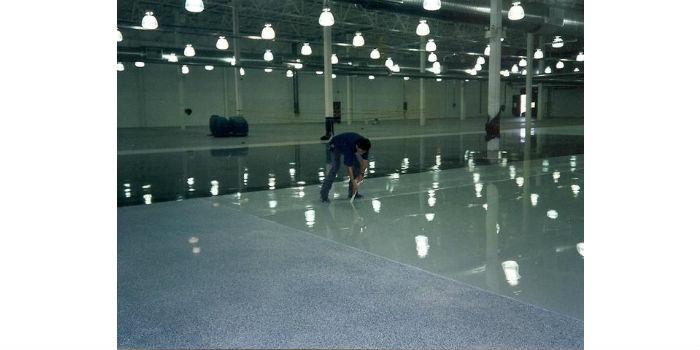
Epoxy floor coverings are increasing in need in sectors such as shops, hotels, factories, and food producers and warehouses, as they do not have joints that can harbor dirt and contaminants.
To avoid the use of solvents, Project Advisors for the chemical industry offers high solid paints to which you do not need to add diluents or adjusters.
* Luis Ernesto Cañas is the manager of Project Advisors for the Chemical Industry. You can be contacted at the email [email protected]