
Mexico.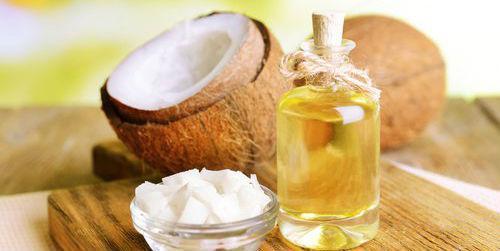 With the use of coconut oil, a fruit abundant in tropical areas of that country, a group of researchers from the National Autonomous University of Mexico (Unam) develops an anticorrosive compound that protects the ducts from deterioration.
It is produced at the Institute of Physical Sciences (ICF), Morelos campus, and has proven in its experimental stage to be competitive with imported commercial products currently used by Petróleos Mexicanos (Pemex).
"With its generation from coconut oil, it is intended to apply national science, give a high added value to the fruit that is planted in rural communities, and benefit farmers in coconut areas," explained Jorge Antonio Ascencio Gutiérrez, doctor in Physics and researcher at the ICF.
Ascencio and his colleagues designed a project, which currently has the support of UNAM, Conacyt and the Guerrero government. "There is a potential market for anticorrosives that Pemex imports from England. We plan to offer an alternative with our own inputs. Those in the community were enthusiastic and we got engaged," he said.
Upon returning to the site, the university students studied the local fruit. Organized in brigades that worked with global positioning systems (GPS), they determined the species, size and age, and since then, they work with Creole and hybrid coconuts, two varieties abundant in the entity.
After the collection, the scientists took some pieces to the laboratory and obtained the oil with qualified methods. "Usually, it is extracted by means of heating presses but as physicists, we knew that this breaks the triglyceride chains, which should be as long as possible," he explained.
In their extraction mode, they created an odorless one, which reduces solar irradiation, controls temperature and pressure, as well as triglyceride separation and moisture exposure conditions, to avoid fungus. "In the future, we want to implement a method so that this process is done in the communities of Guerrero with these controls," he added.
In a laboratory with minimal light, after a machete the pulp is extracted, which is squeezed with a mechanical procedure to obtain oil, which is then characterized.
"That's where the collaboration of Ignacio Regla Contreras, a researcher at the Faculty of Higher Studies (FES) Zaragoza and the Institute of Chemistry (IQ), who characterizes the oil of each coconut to locate its molecular linkage. This is necessary because it means efficiency to optimize the input, reduce costs and make the product competitive internationally. By knowing in detail the type of chains that are going to be exploited, the type to be harvested is defined and, then, it has added value," he said.
With work in Marquelia and on the Costa Grande of Guerrero, the university students are advancing in the development of a corrosion inhibitor compound, which works between the water that damages the pipelines and the oil that makes up the oil.
"With the coconut one, a synthesis is made, in charge of Ignacio Regla, to hit an inhibitor, whose job is to prevent the liquid from adhering to the metal. To achieve this, in the flow of oil you put something that interacts with it, but that rejects water, that is, that is metallophilic and hydrophobic."
The researchers are working on the design of this compound, which has a double structure and emulates the function of imidazoline, a commercial product that is currently used to prevent corrosion in oil facilities.
"We call it the Coco-Guerrero Inhibitor. It is equivalent to imidazoline, has a metatophilic head and a hydrophobic tail of hydrocarbons. What follows is knowing how to do it big and at low cost," he said.
To protect the ducts, the anticorrosive compound is included in the flow of oil, where it performs its function, since it is impossible to coat them inside.
The last part of the work will consist of bringing to the communities of Guerrero the methodology and portable equipment to develop the process and obtain the oil with added value. "It's about everyone winning, about encouraging them to grow," he concluded.
Source: UNAM.