
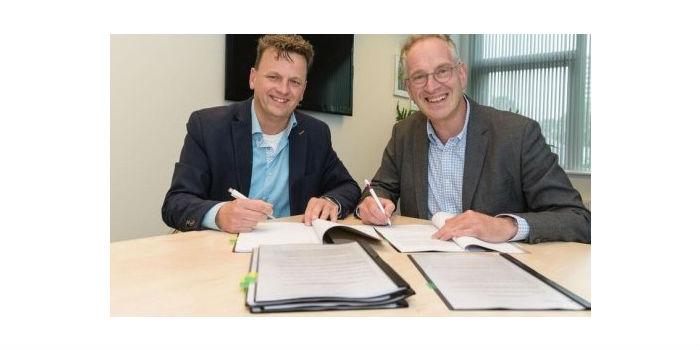
 International. Wageningen University & Research (WUR) in the Netherlands and IPSS Engineering signed a long-term cooperation agreement for the development, optimization and commercialization of the new ProKris anti-solvent crystallization technology.
Both sides have been cooperating in this field on a number of projects since 2014. Currently, a project is underway with the aim of building the first pilot facility for ProKris technology, focusing on the results later this year. IPSS Engineering will conduct this pilot installation in a dedicated technology room, located in the Plus Ultra building on the Wageningen Campus.
Anti-solvent crystallization technology is based on the use of anti-solvents for the separation process, a very effective and cost-effective way to isolate valuable components such as sucrose, fructose, lactose, inulin and isosacarnic acid from complex mixtures such as beet sugar, beet pulp, black liquor and all other raw materials and waste streams containing sugar.
The tests in the pilot installation are not only focused on the implementation of the anti-solvent crystallization process but also on the balance and integration of mass and energy. This will illustrate the potential of the market by generating a business model. For market implementation, WUR and IPPS focus not only on the agri-food sector, but also on the chemical market where sugar is becoming increasingly useful as a raw material.
The process allows the extraction of sugar from various raw materials, while using much less energy than traditional sugar extraction techniques. The main benefits of the technology are energy efficiency, easy-to-scalability technology, and the possible use of various raw materials and waste streams containing sugar. WUR and IPSS will focus on niches in the European sugar market. These include countries and regions that currently do not produce sugar, organically produced sugar, and opportunity-driven unit sales.
Several launch customers from Europe (Ireland, Germany and Portugal) and North America and Africa have already shown interest, either in small-scale technology for their own production facilities or in purchasing a small-scale sugar facility independent of ProKris to develop sugar production in their own country. Small-scale Capex ProKris plants allow local farmers to reintroduce sugar beet into their crops and start processing the sugar in collaboration with local governments, without the need for large, high-risk investments.
Source: Wageningen University & Research.