
 International. A research paper conducted by the University of California, reveals that kale leaves have special surface microstructures that delay the initiation of ice formation making them good candidates for the design of ice-repellent coatings.
The adhesion and accumulation of ice is well known for causing serious problems for different structures such as wind turbines, power transmission and distribution systems and aircraft. Developing coatings that can resist ice formation can solve many challenges in various areas of the industry.
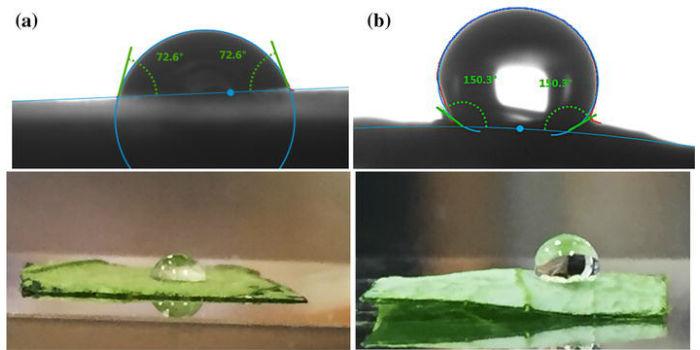
This work was inspired by the nature and resistivity of ice and the superhydrophobicity of plant leaves. Kale is a winter plant with a superhydrophobic behavior, which is normally known as an advantage for cleaning leaves. In-depth experimental analyses, infrared thermography, contact angle measurements, and leaf scanning electron microscopy were performed to discover how different plants can prevent ice formation and, in addition, find an optimal design for an ice-repellent artificial coating.
The study indicates that recent attempts to design icephobic coatings demonstrate that ice resistivity can be achieved either chemically, by decreasing critical surface energy or mechanically through micro- and nano-surface characteristics. However, it is still a challenge to design and manufacture durable ice repellent coatings. To determine the ice-resistant capabilities of different structures, it is essential to evaluate and compare three measurements, including contact angle, delay in the onset of freezing, and nucleation activation energy.
Based on these criteria, superhydrophobic surfaces are good candidates for the design of icephobic coatings as these surfaces are characterized by a high static contact angle (above 150°) and reduced contact angle hysteresis and have shown promising anti-icing properties.
Source: Journal of Coatings Technology and Research.