
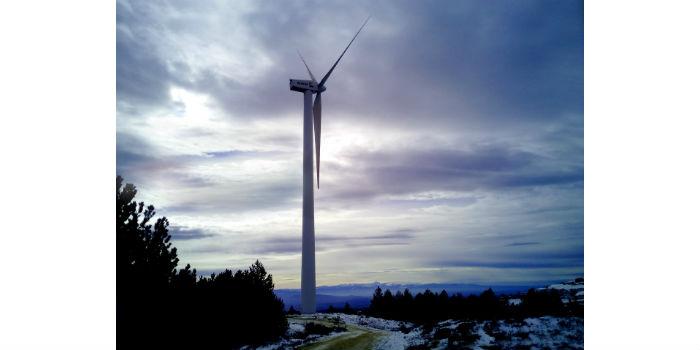
 Spain. Coatings based on nanomaterials have been developed to be incorporated in the form of protective anti-icing paints in wind turbines. The Technological Institute of Plastics (Aimplas) participates in the project called Aeroextreme.
The exposure of wind turbines to extreme climates, such as those that involve the formation of ice on the blades, was until now a problem, since these factors limited their performance and power generation. To ensure the safe and efficient operation of these wind turbines in this type of weather conditions, Aimplas participates in the project.
The contribution of the institute is based on the previous developments of anti-icing coatings, carried out by the center, thanks to the incorporation of nanomaterials, which confer resistance to both extreme temperatures and erosion, and will make possible a reduction in operation and maintenance costs, while opening new markets to wind turbine manufacturers. In addition, the new materials can be incorporated in the form of paints to protect the blades.
The project, co-financed by the Ministry of Economy and Competitiveness in the Challenges-Collaboration 2016 call, has the support of the European Regional Development Fund (ERDF) and is led by Siemens Gamesa Renewable Energies. Laurentia, ITC-UJI and Tekniker will also participate in this study, which will develop their research work in the manufacture and scaling of nanoparticles, the development of ceramic particles and the synthesis, selection and validation of nanoparticles, respectively.
Source: Aimplas.