
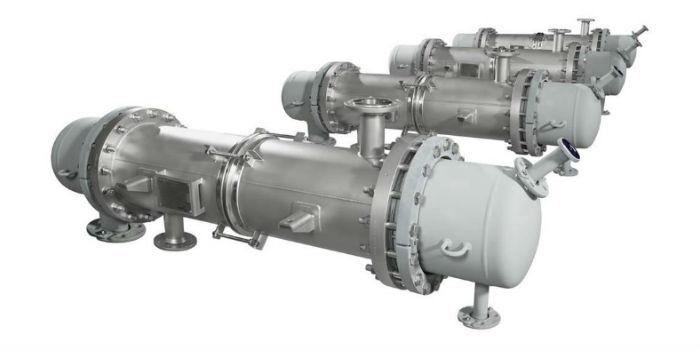
 International. When processing milk and juice, the food industry is using heat exchangers throughout the process. In order not to have any risk to consumers, they have to be free of microbes. A new nanocoating combines three advantages.
Especially in the numerous grooves and recesses of the heat exchanger, persistent biofilms can remain glued together. As a result, heat exchangers must be cleaned at regular intervals using harsh chemicals. These increase corrosion sensitivity, especially if mild steel is used as a heat exchanger material.
Fight against unwanted biofilms
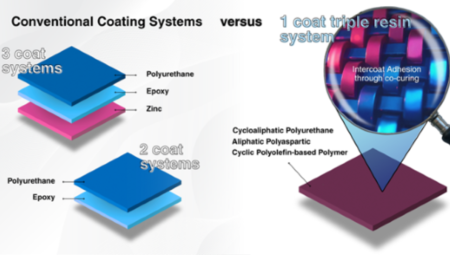
Now the INM - Leibniz Institute for New Materials is introducing new nanoparts that reduce the effort required to clean heat exchangers as well as their corrosion. In these new coatings, the researchers combine anti-adhesive, anticorrosive and, on request, also antimicrobial properties. The developers achieve the anti-adhesive characteristics by introducing hydrophobic compounds that are similar to ordinary Teflon. These inhibit the formation of any unwanted biofilm and allow waste to be transported more easily before it clogs the channels of the heat exchangers.
Structures act as a diffusion barrier
At the same time, the researcher uses structures that act as a diffusion barrier in his coatings. These inhibit corrosion sensitivity which is prevented from corrosive substances or aggressive cleaning agents. To prevent microbes, bacteria or fungi from attaching to surfaces, scientists also use colloidal copper in the coating. Due to the oxygen or water that is present in many processes, copper ions are released from copper colloids. These migrate to the surface and, as a result of their antimicrobial effect, prevent the proliferation and growth of microbes.
Keep paint chemically stable
"In addition, we can keep the paint chemically stable, otherwise it would not withstand the harsh chemicals that are required for cleaning," explained Carsten Becker-Willinger, head of "Nanomers" at the INM. In addition to the fact that the paint could also be adapted for special mechanical loads, the individual plates of the heat exchangers could be subjected to a certain amount of abrasion at the contact points.
Interesting for air conditioning
Mainly, the paint developed could also be used in other contexts, Becker-Willinger said, including the large air conditioning sector with heat exchangers. In addition, the paint could be used for equipment in water purification plants, for example. It can be applied using standard methods such as spraying or immersion and subsequent hardening. It can be used in stainless steel, steel, titanium or aluminum. By selectively adapting individual components, developers can respond to the particular and special requirements of interested users.