
International.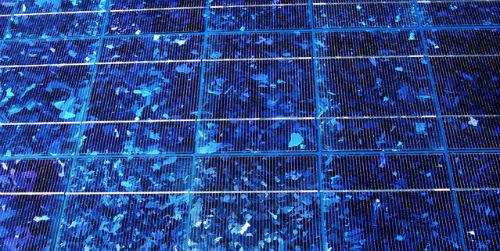 Researchers at the Massachusetts Institute of Technology develop lightweight solar cells with the help of parylene coating.
Although it may take years to become a commercial product, the proof-and-concept lab shows a new approach to making solar cells that could help power the next generation of portable electronic devices.
The scientists indicate that the key to the new approach is to make the solar cell, the substrate that supports it, and a protective coating to protect it from the environment, all in a single process. The substrate is made on site and never needs to be handled, cleaned, or removed from vacuum during manufacturing, thus minimizing exposure to dust or other contaminants that could degrade cell performance.
In this initial proof-of-concept experiment, the team used a common flexible polymer called parylene as a substrate and as a coating, and an organic material called PAD as the primary light-absorbing layer.
The team emphasizes that these particular choices of materials were just examples, and that it is the online substrate manufacturing process that is the key to innovation. Different materials could be used for substrate and encapsulation layers, and that different types of thin-film solar cell materials, including quantum dots or perovskites, could be replaced by the organic layers used in initial testing.