
United States.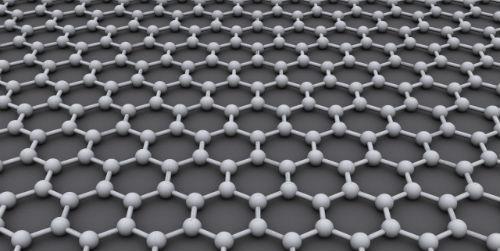 Graphene, a material made up of a single layer of carbon atoms, has been touted as the strongest material in existence, being 200 times stronger than steel, lighter than paper, and with extraordinary mechanical and electrical properties.
Scientists at the U.S. Department of Energy's Lawrence Berkeley National Laboratory (Berkeley Lab) have developed the first known statistical theory about the resistance of polycrystalline graphene, which is made with chemical vapor deposition, and found to be in fact strong (though not as strong as monocrystalline pristine graphene), but most importantly, its hardness or resistance to fractures is quite low.
"This material certainly has a very high strength, but it particularly has low strength (lower than diamond and slightly higher than pure graphite)," said Berkeley Laboratory scientist Robert Ritchie. "Its extremely high strength is very impressive, but we can't use that force unless it has fracture resistance."
Ritchie, along with another scientist, developed a statistical model for the hardness of polycrystalline graphene to better understand and predict failure in the material. "It's a mathematical model that takes into account the nanostructure of the material," Ritchie said. "We found that strength varies with grain size to some extent, but more importantly, this is a model that defines the fracture strength of graphene."
As the authors note in their paper, many of the state-of-the-art applications for which graphene has been suggested, such as flexible electronic displays, corrosion-resistant coatings, and implicitly biological devices depend on their mechanical properties for structural reliability.
Image: commons.wikimedia.org