
International.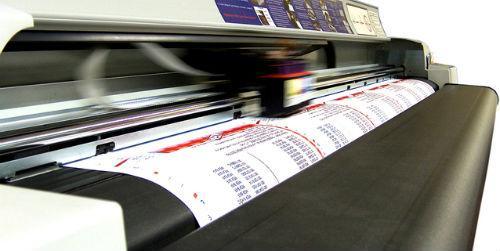 A team reported at ACS (American Chemical Society) Nano on the development of a colorless, non-toxic ink for use in inkjet printers. Instead of relying on dyes, the team exploits the nanostructure of this ink to generate color on a page with inkjet printing.
Current technologies mix dyes to print in color. However, these substances can harm the environment. Some dyes are toxic to marine life or can react with disinfectants such as chlorine and form harmful byproducts.
An alternative to dyes involves changing the nanostructure of materials so that they reflect light in a certain way. An example of this type of light interference coloration is found in nature: squid can modify the nanostructure of their skin to reflect their surrounding environment, creating natural camouflage. Previous research has investigated light interference color printing, but these attempts have required high-temperature fixation or specialized printing surfaces. Aleksandr Yakovlev, Aleksandr. Vinogradov and colleagues at ITMO University wanted to develop a nanostructure color printing technology that is more "green" and can be printed on a wide variety of surfaces.
The team found that a colloidal ink based on colorless titanium dioxide was best suited for the job. It does not require high temperature fixation and can be deposited on many surfaces. Researchers can control the color produced on surfaces by varying the ink deposition thickness of a regular inkjet printer. It remains a challenge to create a vibrant red color with this method and with this very narrow angle of coloration. This method, however, has generated the first notification of "green" ink that is both safe for the ecosystem and does not fade from UV exposure, the researchers say.