
 International. Researchers at the University of Cambridge are using microencapsulation technologies developed by Dolomite Microfluidics to develop self-healing building materials.
The Engineering Department's Geotechnical and Environmental Research Group is developing microcapsules containing "healing" agents, such as minerals, epoxy or polyurethane, which can be added to building materials to allow for the self-repair of small cracks that develop over time.
Dr Livia Ribeiro de Souza, a postdoctoral researcher in the group, explained: "Many composite building materials used in the construction industry, such as concrete, suffer fatigue over time and develop small cracks. We hope to overcome this problem by adding microcapsules filled with "healing" agents to the concrete before it is used. The idea is that, as the cracks begin to form, they break up the microcapsules, releasing their payload and stabilizing the material."
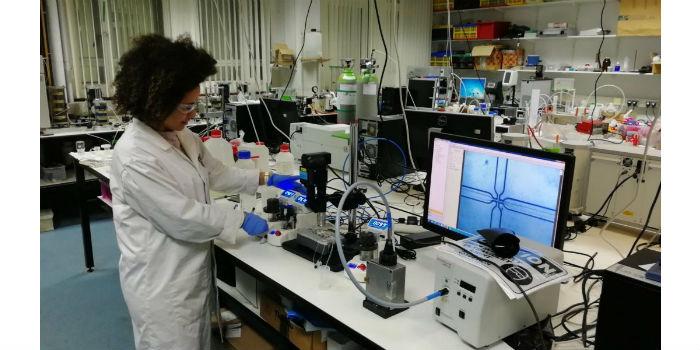
"This approach requires the formation and functionalization of double emulsion microcapsules, which we have been producing with the help of microfluidics." We have been using a Dolomite microfluidic system since 2014, and we found that microfluidics offer better control of particle size and composition than traditional emulsification polymerization techniques, simplifying research and optimizing particle properties."
The Dolomite system has allowed researchers to create functionalized microcapsules that bind more strongly to the cement matrix, while also having thinner shell walls and increased core retention, improving their self-healing properties. Livia continued, "It's good to be able to discuss any issues we have with the experts at Dolomite Microfluidics, helping to accelerate our research and bringing us one step closer to real-world applications."
Source: www.dolomite-microfluidics.com