
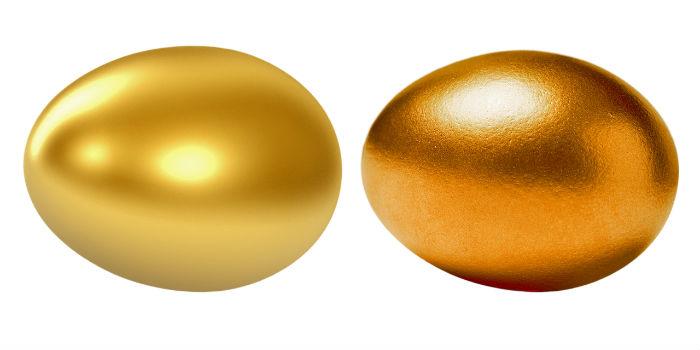
 International. Browning is the process of coating intricate artifacts with precious metals. The ancient Egyptians and Chinese covered their sculptures with thin sheets of metal using gold, and these golden sculptures have resisted corrosion, wear and environmental degradation for thousands of years. Tutankhamun's middle and outer coffins, for example, are golden gold leaf, as are many other ancient treasures.
In a new study, Sameh Tawfick of Illinois, of the Department of Mechanical Engineering and Engineering (MechSE) and the Beckman Institute, inspired by this ancient process, has added a single layer of carbon atoms, known as graphene, to the top of metal sheets – doubling the quality of the gold's protection against wear.
The researchers coated thin sheets of palladium metal with a single layer of graphene.
Metal sheets, or sheets, offer many advantages as a scalable coating material, including their commercial availability on large rolls and their comparatively low price. By attaching a single layer of graphene to the sheets, Tawfick and his team demonstrated unexpected benefits, including improved mechanical strength. His work presents interesting opportunities for protective coating applications in large structures such as buildings or boat hulls, metal surfaces of consumer electronics, and small precious artifacts or jewelry.
Adding one more layer of graphene atoms to palladium made it twice as resistant to indentations as leaves discovered alone," Tawfick said. "It's also very attractive from a cost perspective. The amount of graphene needed to cover the golden structures of the Carbide & Carbon Building in Chicago, for example, would be the size of a pinhead."
In addition, the team developed a new technology to grow high-quality graphene directly on the surface of 150-nanometer-thick palladium leaves in just 30 seconds. Using a process called chemical vapor deposition, in which the metal sheet is processed in a 1,100°C furnace, the discovered palladium sheet acts as a catalyst, allowing the gases to react quickly.
Kaihao Zhang, PhD candidate at MechSE and lead author of the study, said: "The deposition of chemical graphene vapour requires a very high temperature, which could melt the leaves or make them grow by a process called solid-state dehumidification. The process we developed deposits graphene fast enough to prevent degradation at high temperatures, is scalable and produces very high quality graphene."
Source: www.sciencedaily.com