
International.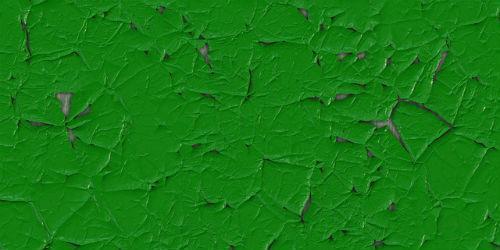 A report prepared by the British newspaper BBC Mundo revealed the list of nine countries that, due to lack of regulation, still use lead in their paints.
"Bolivia, Colombia, Dominican Republic, Ecuador, El Salvador, Guatemala, Honduras, Nicaragua, Paraguay and Peru still do not have mandatory laws on the limit of lead in decorative paints," revealed the report that also notes that each year 143,000 people die from health problems derived from lead poisoning, according to the World Health Organization (WHO).
For their part, the countries that do have their regulations in force, but that must improve in their compliance are Argentina, Brazil, Chile, Costa Rica, Cuba, Mexico, Panama, Uruguay and Venezuela.
The report was presented by the Global Alliance to Eliminate Lead in Paints (AGEPP), led by WHO and the United Nations Environment Programme (UNEP).
The report also reveals that there are gaps in import and export and exposes the case of Cuba, where "the lead content in paints is limited to 20,000 parts per pm, while in Argentina, Brazil, Chile, Costa Rica, Mexico, Panama or Uruguay it is 600 parts per million (ppm)," the source reveals.
While compared to countries in Europe and the US, these limit to 90 ppm.
Another revelation that is known from the report is that in the absence of a regulation of lead with paint, companies are not obliged to report on the label whether or not the product has lead. "They're available on the same shelf at the same price, but there's no way for the consumer to know," explains Perry Gottesfeld of OK International, a U.S.-based NGO that has studied this problem.
Juan Caicedo, of AGEPP, stressed that large manufacturers no longer use lead in their products, as in the case of PPG Industries, which no longer uses that element for products for sale to the public and that in 2020 plans to eliminate it from all its products, as well as AkzoNobel, which works with the United Nations program to achieve the international goal of eliminating the chemical element by 2020.
The problem with lead in paints is that it wears out over time on the wall and furniture, when it deteriorates, flakes and dust can come off that contaminate the home environment, and children are the most vulnerable to ingesting fragments of lead paint when they play on the floor and collect particles.
WHO has detected behaviours in children in which in some cases they compulsively tear off small fragments of paint and swallow them.
Lead particles entering the human body travel to lodge in the brain, liver, kidneys, bones and teeth, the WHO explains.
Among the main sequelae are reduced cognitive ability, dyslexia, attention deficit disorder and antisocial behavior.
In more severe cases it leads to deafness, mental retardation, a person experiencing a coma, seizures and even death.
Source: BBC Mundo.