
United States.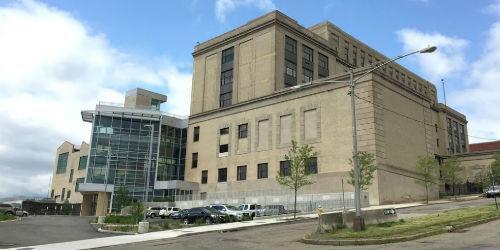 The renovation of an 86-year-old historic building in Pittsburgh — Energy Innovation Center (EIC) — took special care to preserve the building's interior features. The concrete floor of the 20,000-square-foot building was poured in 1930, and the surface was severely chipped and cracked in many areas.
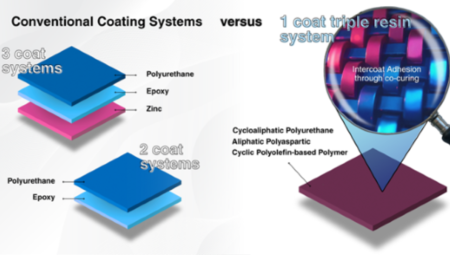
The restoration process includes a cement layer to repair existing concrete, an epoxy primer, and a final layer of two-component water-based polyurethane based on high-performance resins and technology from Covestro LLC to protect long-term against wear and stains.
The selected top layer was a commercially available product, Sherwin Williams GP 4409 WB polyurethane satin, which features low volatile organic compound (VOC) content and vapor permeability of a transparent layer of water-based aliphatic polyurethane.
The VOC content of the top layer is less than 50 grams per liter of cosolvent, an important consideration for the building's Platinum LEED certification aspirations. It provided similar operating characteristics and ease of application as a solvent-based polyurethane system, but with very little odor during application.
The choice of a top coating with a long working time was crucial, as the concrete was built with "day Joints", saw cuts and other surface injuries. After letting the ground dry overnight, the contractors were able to walk over the area to access other parts of the EIC.
Other important qualities include UV stability, durability, longevity and good chemical and abrasion resistance. The high-performance coating will protect floors from standing traffic, wheeled carts, stains and abrasion for years to come.