 Spain. A new phase of the Acorn (Advanced Coatings for Offshore Renewable Energy) project begins in Santander, funded by the European Union under the Seventh Framework Programme and whose main objective is the development of a family of advanced coatings to solve the problems of marine corrosion, biofouling and erosion due to cavitation.
One of the solutions developed in this project will contribute to a very important economic saving, since it is estimated that the problem of corrosion worldwide involves an expense of the order of 1.3 billion euros per year. On the other hand, with this solution it has been sought to minimize the environmental impact. Not only will Acorn make better use of the planet's resources by extending the life of many components, but the coatings that have been designed are environmentally friendly.
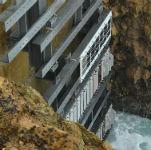
In order to validate the initial results obtained in the laboratory, the Technological Center for Components (CTC) has made available to the Project a test area called "Marine Corrosion Test Site El Bocal" (MCTS El Bocal). This unique facility in Spain has been developed thanks to the collaboration between the CTC and the IEO (Spanish Institute of Oceanography) and co-financed in the Innpulsa 2013 call of the Ministry of Innovation, Industry, Tourism and Commerce of the Government of Cantabria and Feder Funds. It is designed for testing materials, coatings and other components under real marine conditions. This installation serves for the study of the phenomenon of marine corrosion, necessary to provide solutions for the industry. In addition, CTC has in its facilities a laboratory specialized in corrosion where accelerated tests of the processes that the materials would suffer in real conditions of exposure at sea are carried out.
On March 19, a series of specimens of different materials were placed in the MCTS El Bocal, to which the coatings developed in the previous phases of the Acorn project had previously been applied. They will remain there for nine months. After this time, the behavior that these coatings have had after their exposure to corrosion and biofouling will be studied, and the necessary results will be obtained for their validation for their future release to the market.
The Components Technology Centre participates in this project together with the Cantabrian company Degima and other European partners: TWI Institute (United Kingdom), the University of Göteborg (Sweden) and the companies Wave Dragon (Denmark), Tocardo Tidal Turbines (Netherlands) and Alphatek Hyperformance Coatings Limited (United Kingdom). Acorn's applications will be the use of these coatings in all types of marine installations.