
 Spain. The Technological Institute of Plastics, Aimplas, presented a recent project in which it refers to new formulations of adhesives with improved properties. The institute explains that adhesives have experienced in recent years a spectacular advance replacing traditional joints such as mechanical or welding.
This progress has been largely due to the significant effort that has been made in R & D to get adhesives on demand. Mainly its mechanical resistance, durability, resistance to high temperatures, water resistance, electrical conductivity, variable curing cycles, etc. are valued.
The largest and most important group of adhesives are structural adhesives, so called because they not only support the weight of the adherents but also the mechanical stresses to which they are subjected. Epoxy, acrylics and polyurethane adhesives are considered structural adhesives, but also polyimides, silicones, foamed acrylic tapes and phenolic nitrile. Epoxy adhesives are the most rigid and have a great power of adhesion. On the contrary, polyurethane ones are the most flexible and adhere porous and irregular surfaces. Acrylics are presented as the alternative to epoxy and polyurethane and their main advantage is that they do not require a large preparation of the surface of the adherents (as if they require epoxies and polyurethanes).
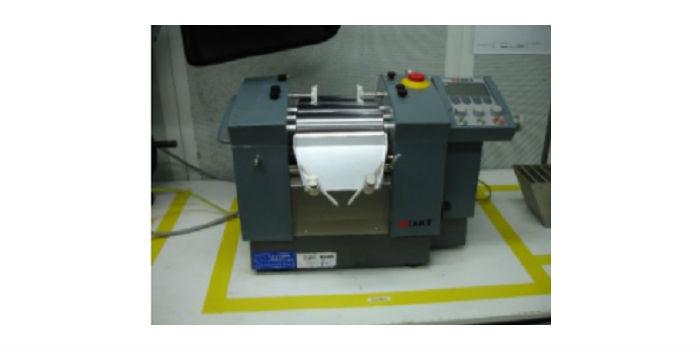
Aimplas is carrying out different research projects with the aim of improving certain properties of structural adhesives such as: mechanical properties, durability and electrical conductivity properties. To this end, new formulations of adhesives are being developed using fillers and nanoloads, as well as new hardeners that allow achieving the objectives set. To this end, the Aimplas pilot plant has the necessary equipment to correctly disperse these nanocharges in the adhesive (see photo), as well as the realization of the specimens and the chemical and physico-mechanical tests necessary for their verification.
In this way, adhesives are expanding their range of applications, thanks to research and development in this field, making bonding with adhesives the bonding method of the future.
Source: Aimplas.