
 United States. A team of researchers from MIT (Massachusetts Institute of Technology) has found a solution that could prevent leaks from an oil rig. You can also avoid blockages within oil and gas pipelines that can lead to costly stops to clear a pipe, or worse, to pipe rupture from a pressure buildup.
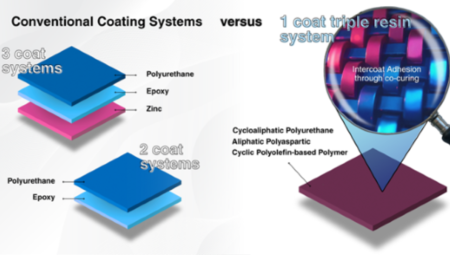
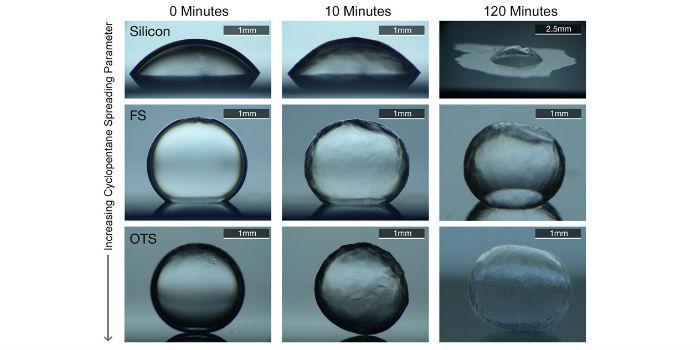
The key to the new system is to coat the inside of the pipe with a layer of a material that promotes the spreading of a layer of water barrier along the inner surface of the pipe. This barrier layer, according to the study, can effectively prevent the adhesion of any ice particles or water droplets to the wall and thus thwart the accumulation of clathrates that could slow or block the flow.
The researchers explained that unlike previous methods, such as heating pipe walls, depressurization or using chemical additives, which can be expensive and potentially polluting, the new method is completely passive, meaning once in place it requires no more addition of energy or material. The coated surface attracts liquid hydrocarbons that are already present in the flowing oil, creating a thin surface layer that naturally repels water. This prevents the ice from attaching to the wall in the first place.
Existing prevention measures, known as flow assurance measures, "are expensive or not environmentally friendly," says Kripa Varanasi, a professor of mechanical engineering at MIT, and currently the use of those measures "reaches hundreds of millions of dollars" each year. Without those measures, hydrates can accumulate to reduce flow, which can reduce revenues, and if they create blockages then that "can lead to catastrophic failure," Varanasi says. "It's a big problem for the industry, both for its safety and for its reliability."
The problem could be even bigger, says Das, lead author of the paper, because methane hydrates, which are abundant in many places like continental shelves, are seen as a huge new potential fuel source, if methods can be devised to extract them. "The reserves themselves substantially eclipse all known [oil and natural gas] reserves on land and in deep water," he says.
But such deposits would be even more vulnerable to freezing and plug formation than existing oil and gas wells. Preventing these ice buildups critically depends on stopping the first clathrate particles from adhering to the pipe: "Once they stick, they attract other particles" of clathrate, and the buildup takes off quickly, Farnham says. "We wanted to see how we could minimize the initial adhesion on the pipe walls."
The approach is similar to that used in a company set up by Varanasi to market previous work from its lab, which creates coatings for containers that prevent contents — from ketchup or honey to paint and agrochemicals — from sticking to the container's walls. That system involves two steps: first creating a textured coating on the walls of the container, and then adding a lubricant that gets trapped by the texture and prevents the contents from adhering.
The new piping system is similar, Varansai explains, but in this case "we are using the liquid that is in the environment," instead of applying a lubricant to the surface. The key feature in clathrate formation is the presence of water, he says, so that as long as water can be kept away from the tube wall, the buildup of clathrates can be stopped. And the liquid hydrocarbons present in the oil, while clinging to the wall thanks to a chemical affinity of the surface coating, can effectively keep the water away.
Source: Massachusetts Institute of Technology.