
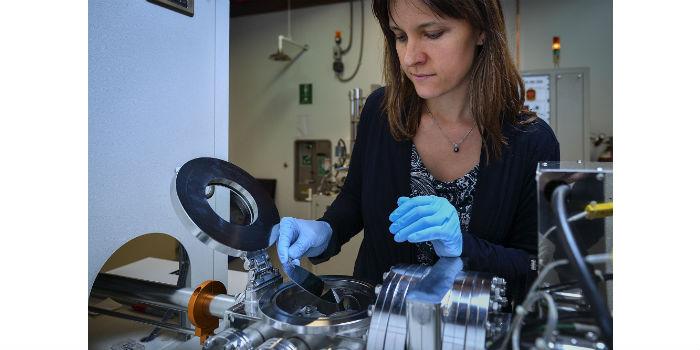
 United States. A professor at the University of North Texas has discovered a solution for glass reflection : Diana Berman, a professor of materials science in the College of Engineering, has created a simple coating with the potential to have a big impact.
"This could help the everyday person in many ways," Berman said. "For example, when you look at your cell phone outdoors, it's hard to read because of the reflection of light. This could change that. It could also help when you drive. Think about how the sun's glow on the car's windshield can make visibility difficult at certain times of the day. This could help decrease that. It could even help with the glasses you wear," explained the professor, who is working on this research in collaboration with Argonne National Laboratory. He said they started the project with the goal of helping the solar panels work better.
"Not all of the sunlight on solar panels is transmitted inside because of the reflection of the glass," he said. "We are working to dramatically increase the light transmission capacity and efficiency of solar panels by reducing reflection. Traditionally, polymer-based nanoporous films are used as anti-reflective coatings. One of the problems is that conventional polymers cannot withstand the intense UV light of the sun. Replacing polymers with other non-UV-sensitive materials to design controlled nanoporous structures has been a challenge so far. We've done one. In fact, our anti-reflective ceramic coatings can work up to 2,000 degrees," explained the expert.
While improving solar panels is Berman's first goal, she's excited to see how many products can be improved with her coating. "This starts with solar energy, but it goes beyond that," he said. "It could work with windows, lenses - anything. You can design a specific material for any surface that needs an anti-reflective coating."
Source: University of North Texas.