
International.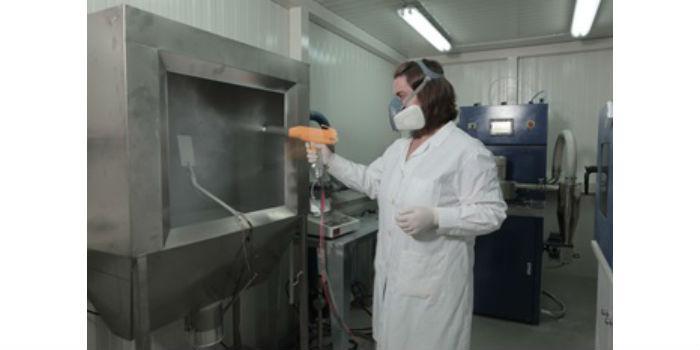 The automotive sector is facing increasingly restrictive legislation regarding CO2 emissions, a context in which composite materials play a key role, as they allow products with a reduced weight, with high mechanical properties and rigidity to be obtained. However, there are still some limitations related to costs and the proportion of production that prevent their presence in the market.
To overcome these obstacles, Aimplas (Technological Institute of Plastics, Valencia-Spain) coordinated the European project Ecogel Cronos. One of the objectives of this project is to develop a powder gel coat coating with electrical conductivity properties obtained by the incorporation of carbonaceous charges.
The conventional use of this type of coating has some important limitations, such as the emission of volatile organic compounds (VOCs) and long curing times. By applying this coating on the mould, a reduction in curing times has been achieved, from one hour to a few minutes, as well as a reduction in VOC emissions (thus eliminating styrene emissions) during the polymerisation of the coating.
In addition, its electrical conductivity allows to eliminate the secondary painting stages for the final finish with electrostatic paint, thus achieving a reduction in manufacturing costs and raising the production ratio.
Another benefit of using powder coatings is the reduction of storage and energy costs, since it is not necessary to store catalytic systems in refrigeration, since their use is eliminated during the manufacturing process. In addition, it is a recyclable coating. The excess applied on the mold can be recovered by a vacuum system and reused for intermediate uses.
Source: Aimplas.