
International.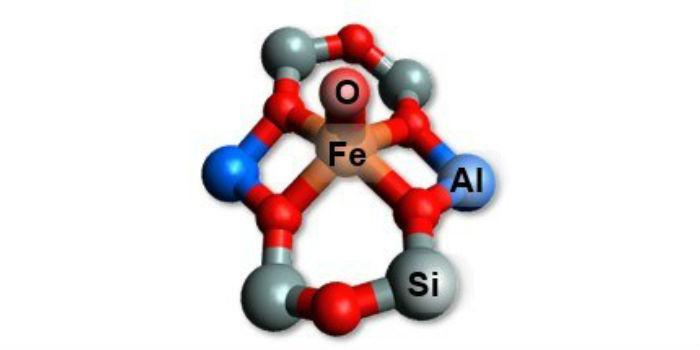 Scientists from KU Leuven (Belgium) and Stanford University (United States) have unraveled the mechanism behind the process of direct conversion of natural gas to methanol at room temperature. The researchers say that this discovery will have important consequences for the future use of methanol in various daily applications.
Methanol is one of the twenty most widely used substances in the chemical industry. It is used to produce antifreeze, fuels and solvents, and also in common types of plastic. The substance is made of natural gas (methane). The large-scale conversion of methane to methanol currently involves several stages under high pressure and at high temperature, making it an energy-intensive process.
It is known that in the nineties scientists developed a more direct method of producing methanol – a process that even produces extra energy. However, they did not understand the process. It was a kind of "black box" into which they inserted methane, with a great possibility of methanol coming out to the other end.
Twenty years later, postdoctoral researcher Pieter Vanelderen, from KU Leuven's Center for Surface Chemistry and Catalysis, has unraveled the mechanism behind the process, in collaboration with chemists at Stanford University.
The chemical reaction involves adding a specific substance known as a catalyst. Many catalysts consist of zeolites – minerals with a porous structure – that contain a specific atom. For the direct conversion of methane into methanol, this catalyst is a zeolite with added iron. Professor Bert Sels says: "We found that iron needs to bind to zeolite in a flat, bonded orientation" (see image).
"We have provided the first exact definition of what the iron atom appears to need to convert methane into methanol at room temperature. In addition, we can describe why this conversion method is so successful," explained Pieter Vanelderen. This discovery may revolutionize the production of methanol and, by extension, all its derivatives that we use in our daily lives.
Now that scientists know exactly what the catalyst looks like, they can start mimicking and optimizing it in the lab. This opens up many possibilities for the future. On the one hand, the production of the methanol needed to produce plastic will become much cheaper. The catalyst is also useful for the conversion of nitrogen oxides. It could be used, for example, to clean exhaust gases from cars.
Source: KU Lueven.