International.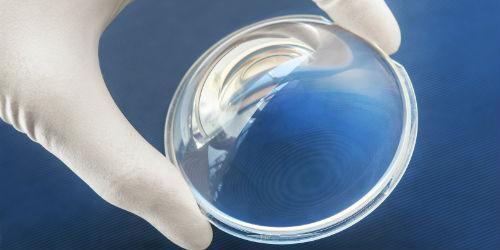 Researchers unveiled a new type of anti-reflective coating that significantly reduces scattered light and reflections from plastic lenses. Improves the performance of cameras and headlights.
Today, the preferred material for lenses is clear plastic, as the low-cost process of plastic injection molding can be used to produce lenses in any shape. However, it is still a problem: the fact that light is reflected from the surface of the lenses.
The coating reduces the refractive index on the surface of the plastic optics to almost 1.1, which offers an almost perfect transition to air. Fraunhofer IOF has studied and tested coating prototypes in different lens systems, in close cooperation with industry partners.
The results show that the technique markedly reduces what is known as stray light: reflecting light that is scattered through lens systems, for example, in cameras, and interfering with the way light rays are focused.
The anti-reflective system developed by researchers at Fraunhofer IOF in Jena pairs several layers of innovative nanostructured films with conventional homogeneous oxide layers. In successive layers, the researchers dilute the plastic with more air, until the refractive index on the surface is almost equal to that of air. They achieve this by using new nanomaterials that can be applied to lenses with complex shapes. Multi-layer stacking allows them to double the thickness of the anti-reflective coating compared to previous solutions.
Source: Fraunhofer Society.