International.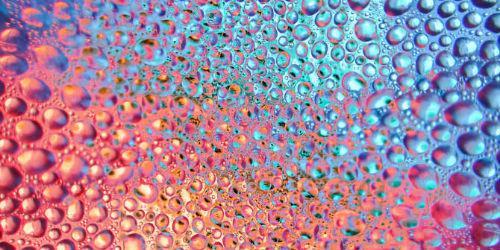 Using experimental techniques, researchers have made the first direct observation in the difficult process of dehumidification, which takes place when a liquid film retracts to form a droplet in the form of beads.
The achievement could now spark a new line of research and lead to breakthroughs involving the use of liquids, such as better coatings and more effective self-cleaning surfaces.
Dehumidification is the opposite of "recreation," a familiar process that can be observed day by day, such as when a drop of oil is placed on the surface of a pan. The liquid initially has a cord-like shape, and gradually spreads to form a thin film.
The opposite process, called dehumidification, occurs when a liquid film retracts from a solid to form a droplet in the form of beads, which can be observed when a wet window stopped drying.
The details of dehumidification are extremely important for any situation that involves the removal or drying of a liquid. Despite its apparent simplicity, direct observation of the complete dehumidification of a droplet in a single drop had been difficult to find and difficult to achieve until the recent experiment at Northumbria and Nottingham Trent Universities.
In a recent paper published in the journal Science Advances, the research team came up with an ingenious solution to this problem. Using a new method known as dielectrowetting, it exploits the electrical properties of liquids to force a liquid to coat a solid surface using an applied voltage.
The researchers say that "our experimental setup opens up the possibility of preparing liquid forms in a very controlled way, which they then dehumidify. This can lead to new methods for liquid handling in technologies such as surface coating and self-cleaning."
Data Source Provider: Northumbria University