United States.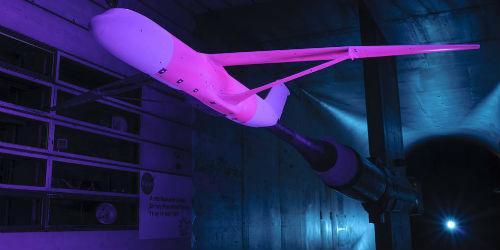 NASA engineers have used pressure-sensitive paint (PSP) for more than 25 years. The bright pink paint is helping NASA's aeronautical innovators test new aircraft designs that could cut fuel consumption in half, pollution by 75% and noise to nearly one-eighth of what it is today.
"The PSP is great because while you can apply the paint to the area you want to test, light it with a lamp, and view it with a camera, it can collect data that you might not otherwise be able to get," said Nettie Roozeboom, an aerospace engineer at NASA's Ames Research Center in California.
Engineers need to know how pressure is distributed across the entire surface of an aircraft as it moves through the air so that they can ensure, among many other critical variables, that the loads the vehicle is experiencing in the given conditions in the wind tunnel are understood.
The PSP method:
- A thin layer of special paint, about one and a half thousandths of an inch thick, is applied on the model to be tested in the wind tunnel and allowed to dry.
- The model is then installed in the wind tunnel, which is also equipped with a series of blue LED lights and complemented with black and white cameras specially equipped to record the test.
- With the wind tunnel active, air flows over the resulting model at greater or lesser pressure on the surface. Blue lights awaken molecules known as luminophores within the paint making them fluorescent or bright.
- At the same time, due to the nature of paint chemistry, oxygen molecules turn off the luminophores. High-pressure areas have more oxygen, so the pink color glows dim. Lower pressure areas have less oxygen, so the pink color shines brighter.
- These differences in the amount of fluorescence of the paint or gloss is recorded by the cameras, and the resulting images are analyzed in black and white. The intensity of the different shades of gray becomes a color scale that indicates the different pressure levels.
Source: NASA.