
United States.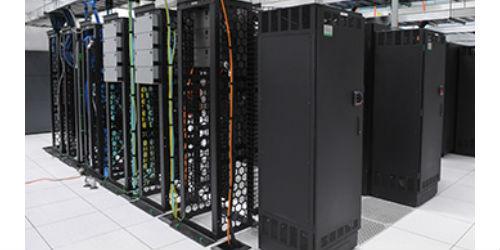 Data centers absorb a lot of energy. In an attempt to reduce the amount that will keep computer equipment away from overheating, many data centers use energy-efficient systems that use outside air to keep things cool.
The problem is that these systems can bring polluting gases and particles from the atmosphere that corrode copper and silver into computer equipment.
To provide a better understanding of this damage, Syracuse University professors Jianshun Zhang, Jeremy Gilbert and Roger Schmidt have received $247,792 from the American Society of Heating, Refrigeration and Air Conditioning Engineers (ASHRAE) to determine the impact of gaseous contamination and humidity on the performance of data center computers.
The team will look for the impacts of gaseous pollutants such as SO2, NO2, H2S, O3 and Cl2 under various temperature and humidity conditions. These contaminants can act alone or together to corrode metals, causing permanent damage to circuit boards, connectors, integrated circuits, and other electronic components.
In their study, the researchers will subject copper, silver and voltage printed circuit boards to controlled concentrations of polluting gases, temperature, humidity and air movement. Corrosion is measured and analyzed to improve understanding of the corrosion mechanisms of combinations of contaminants and concentrations, as well as humidity and temperature.
The results and recommendations will help establish new design and operation guidelines for controlling moisture and contaminants in data centers around the world. Ultimately, the results of the study will help data centers use as little power as possible, while maintaining the vital buzz of computer equipment.