International.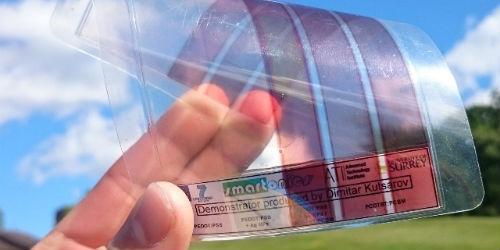 New research has shown that graphene can be manipulated to create, to date, the lightest absorbent material for its weight. This thin nanometric material will enable future applications such as "smart wallpaper", which could generate electricity from light or heat residues, and power a host of applications within the growing "Internet of Things".
Using a technique known as nanotexturing, which involves growing graphene around a textured metal surface, researchers at the University of Surrey's Institute of Technology were inspired by nature to create ultrafine graphene sheets designed to capture light more effectively.
Only one atom thick, graphene is very strong, but traditionally inefficient at absorbing light. To combat this, the team used nano-patterns to locate light in the narrow spaces between textured surfaces, increasing the amount of light absorbed by the material by 90%.
Graphene has already stood out for its remarkable electrical conductivity and mechanical strength. Professor Ravi's team understood that for graphene's potential to be real as a material for future applications, it must also harness light and heat effectively.
"Solar cells coated with this material would be able to pick up very dim light. Installed indoors, as part of the future 'smart wallpaper' or 'smart windows', this material could generate electricity from light or heat residue, powering a numerous variety of smart applications. New types of sensors and energy harvesters connected through the Internet of Things would also benefit from this type of coating," said Ravi Silva, professor in charge of the research.