
International.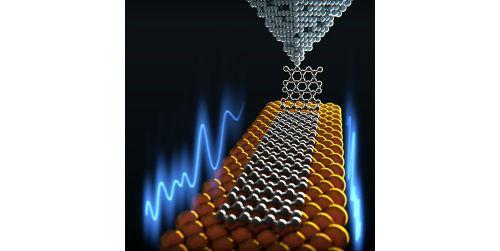 Graphene, a modified form of carbon, offers versatile potential for use in machine coating components and in the field of electronic switches. An international team of researchers led by physicists from the University of Basel (Switzerland) have been studying the lubricity of this material at the nanometer scale.
Since it produces almost no friction, it could drastically reduce energy loss in machines when used as a coating, as the researchers report in the journal Science.
In the future, graphene could be used as an extremely thin coating, resulting in little energy loss between mechanical parts. This is based on the exceptionally high lubricity – or so-called super lubricity – of carbon modified in the form of graphene. Applying this property to mechanical and electromechanical devices would not only improve energy efficiency, but also considerably extend the life of the equipment.
An international community of physicists from the University of Basel and Empa have studied graphene's above-average lubricity using a dual approach that combines experimentation and computation. To do this, they anchored two-dimensional strips of carbon atoms — called graphene nanoribbons — to a sharp tip and dragged them across a golden surface. Computer-based calculations were used to investigate the interactions between the surfaces as they moved through each other. With this approach, the research team led by Professor Ernst Meyer, from the University of Basel, is hoping to understand the causes of superlubricity; So far, research has been carried out in this area.
Measuring the mechanical properties of the carbon-based material also makes sense, as it offers excellent potential for a wide range of applications in the field of coatings and micromechanical switches. In the future, even electronic switches could be replaced by nanomechanical switches, which would use less energy for turning conventional transistors on and off.
Experiments revealed near-perfect frictionless motion. It is possible to move graphene tapes with a length of 5 to 50 nanometers using extremely small forces (from 2 to 200 piconewtons). There is a high degree of coherence between experimental observations and computer simulation.