
International.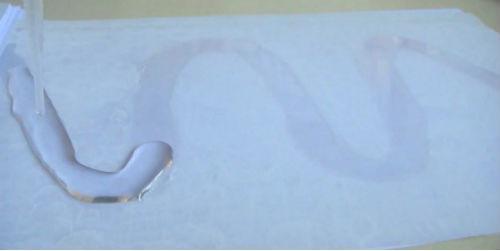 Researchers at the University of Murcia, Spain, have developed a nano-coating that incorporated into different surfaces is capable of repelling a wide range of liquids. These bounce off the treated surface, which remains completely dry. It is a nano-metric layer composed of siliceous materials and polymers that retain air on its surface.
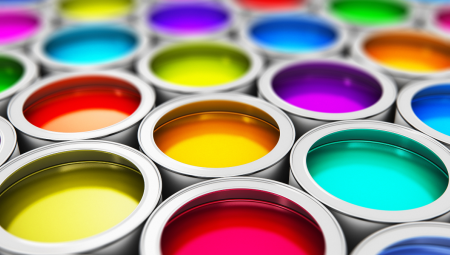
These coatings can give rise to very advanced paints, which are called "superomnyphobic" and have a multitude of possible applications ranging from objects that do not get dirty, to the protection of stones of the historical heritage or the achievement of anti-graffiti surfaces, among others.
The liquids that would normally dirty the surfaces on which they are poured, are repelled by the action of the "superomnyphobic" paint. "Practically any liquid that is poured on it bounces without wetting it, that is, we have dry surfaces even if it rains or surfaces protected against stains from other liquids such as oils, alcohols, or other organic compounds preventing them from adhering and that can alter and stain these surfaces," explains Professor Pedro Antonio García Ruiz, responsible for the research.
The coatings developed base their operation on the structuring of surfaces imitating the lotus flower, since it can be dry in a pond, because its surface is composed of thousands of nanoparticles randomly distributed throughout the surface of its leaves, which allows it at the molecular level to store air molecules between each nanoparticle, which makes it possible for water not to penetrate into the leaf, so that any liquid that comes into contact with the coating barely touches a solid surface. This new coating performs this same function, depositing on the surface nanoparticles that self-organzian, creating an air film that prevents the penetration of liquids that dirty the surface.
The work developed at the UMU has unique to use a system of two layers, one of them made up of polymers usually used in paints, and another composed of siliceous particles available on the market, being able to find both compounds at reasonable prices, so that this product can be used in many applications that were previously vetoed by price. "The function of polymers is to keep the particles anchored on the surface on which they are deposited, while silica allows these particles to self-organize," says Professor García Ruiz.
Another feature of these coatings is that they can be colored and can be repainted without problems like many commercial paints.
If you want to see the demonstration videos of the paintings you can click here.