
 International. New research presents graphene as a novel and promising surface coating that can be used to minimize metal corrosion in adverse microbial conditions.
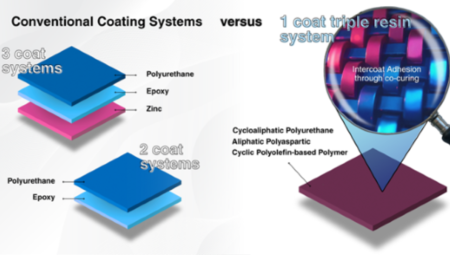
"The most important finding of our work is that graphene coating offers a 100-fold improvement in corrosion resistance compared to commercially available polymer coatings on the market," said Dr. Ajay Krishnamurthy, currently a guest researcher in the Engineering Laboratory (EL) at the National Institute of Standards and Technology (NIST). and the paper's first co-author, says Nanowerk. "This finding is remarkable considering that graphene is nearly 4,000 times thinner than several commercial coatings, but offers greater resistance to microbial attack."
Ultra-thin graphene coatings have already been proven to be corrosion-resistant coatings of metals. However, as Krishnamurthy points out, two recent studies have provided some very interesting observations about the failure of graphene coatings on copper substrates.
"GRAPHENE COATINGS CVD (Chemical Vapor Deposition) have recently come under a great deal of scrutiny. This is because the CVD process of producing graphene often features surface defects such as hanging bonds, Welsh stone defects, point defects, etc., along with their superior electrical conductivity, these sites act as a means of charge transport and lead to localized corrosion (pitting) on metal surfaces for long periods of time."
With the new study, the international research team, which included scientists from Rensselaer Polytechnic Institute, South Dakota School of Mines and Technology, Oklahoma State University, and Shenyang National Lab for Materials Science, hypothesizes that defective sites on the graphene sheet become clogged due to the presence of polysaccharides and other microbial debris that lead to overall reduction in metal corrosion ranges for prolonged periods. of time.
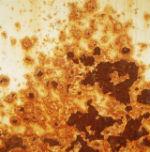
The enormous economic impact of corrosion of metal structures is a very important issue for all modern societies. Estimates for the cost of execution from degradation to corrosion is around €200 billion a year in Europe and more than $270 billion a year in the US.
The annual cost of corrosion consists of both direct and indirect costs. Globally, these costs are estimated to approach $1 billion per year. Direct costs are related to design, manufacturing and construction costs in order to provide corrosion protection, and indirect costs relate to those related to corrosion inspection, maintenance and repairs.
To know the complete study you can enter by clicking here.