
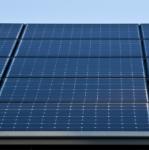
 International. Iranian researchers use titanium dioxide nanoparticles to design and test a special coating that increases the efficiency of solar cells.
The results of the experiments demonstrate the increase in the efficiency of the cells produced. Solar cells can be used to produce electricity in industrial applications, including household, automotive and aerospace appliances.
In recent years, dye-sensitized solar cells have become very important being the third generation of solar cells. Cheaper equipment has simplified the production of the technology and is a suitable substitute for expensive silicon cells. However, studies should be carried out on increasing the efficiency of the new cells because they have a low performance in the conversion of solar to electrical energy. The aim of the research was to produce and study the performance of a type of coating to be used in this class of solar cells.
Titanium dioxide nanoparticles doped with elements such as strontium and chromium are used in the production of the coating. It can be expressed that the increase in the efficiency of the cells compared to the cells produced at the base of the usual coatings containing titanium dioxide is due to the increase in the current density in their short circuits. Among other advantages of the cells, mention can be made of the simple production method, appropriate final price and high transparency to light.
The coating of the nanoparticles contains titanium dioxide and other medium-sized spherical nanoparticles of 60 nm. The crystal structure, chemical structure and composition of the coatings have been controlled in such a way as to increase the current density in the short circuits of solar cells.