
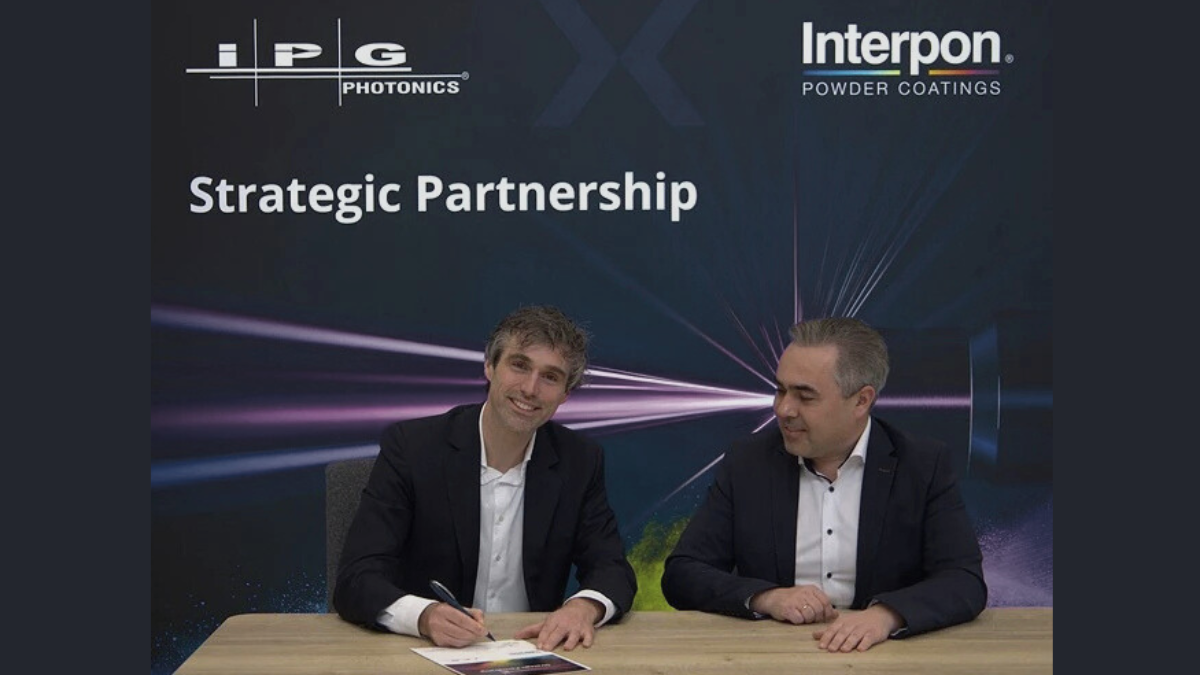
Latin America. AkzoNobel has signed an agreement with IPG Photonics to exclusively develop and commercialize a laser curing solution targeting the powder coatings market in Europe, the Middle East and Africa (EMEA).
The goal of this cooperation is to promote the implementation of a technology that makes it possible to significantly reduce curing periods, energy use and the carbon footprint in industrial processes for the use of powder coating.
The solution merges particular recipes from Interpon, AkzoNobel's powder coatings brand, with laser curing systems created by IPG Photonics. As reported by both companies, this method allows the applied paint to be selectively heated without affecting the substrate or the work environment.
This technology reduces curing times from the current 15-20 minutes required by traditional methods to just a few minutes. In addition, it eliminates the need for subsequent cooling stages, which improves the overall efficiency of production lines. According to IPG Photonics, laser curing systems also take up less than half the space of a traditional oven.
In sectors with large production quantities, this solution could enable reductions of more than 50% in initial investment and operational expenses.
At the signing of the agreement, Jorrit van Rijn, AkzoNobel's Global Head of Powder Coatings Marketing, highlighted the transformative capacity of this technology: "Transformative advantages in process speed, efficiency and energy savings," he said, while emphasizing the company's commitment to sustainability-oriented innovation in the sector.
Trevor Ness, Senior Vice President of Global Sales and Strategic Development at IPG Photonics, valued the partnership as a key opportunity:
"AkzoNobel is a market leader in the EMEA region," he said, stating that the collaboration will allow "accelerating the market introduction of modular laser curing solutions, bringing added value to customers."
Both companies are confident that the synergy between IPG's laser technology and Interpon coatings formulations will facilitate faster implementation and improve the competitiveness of their industrial customers.