

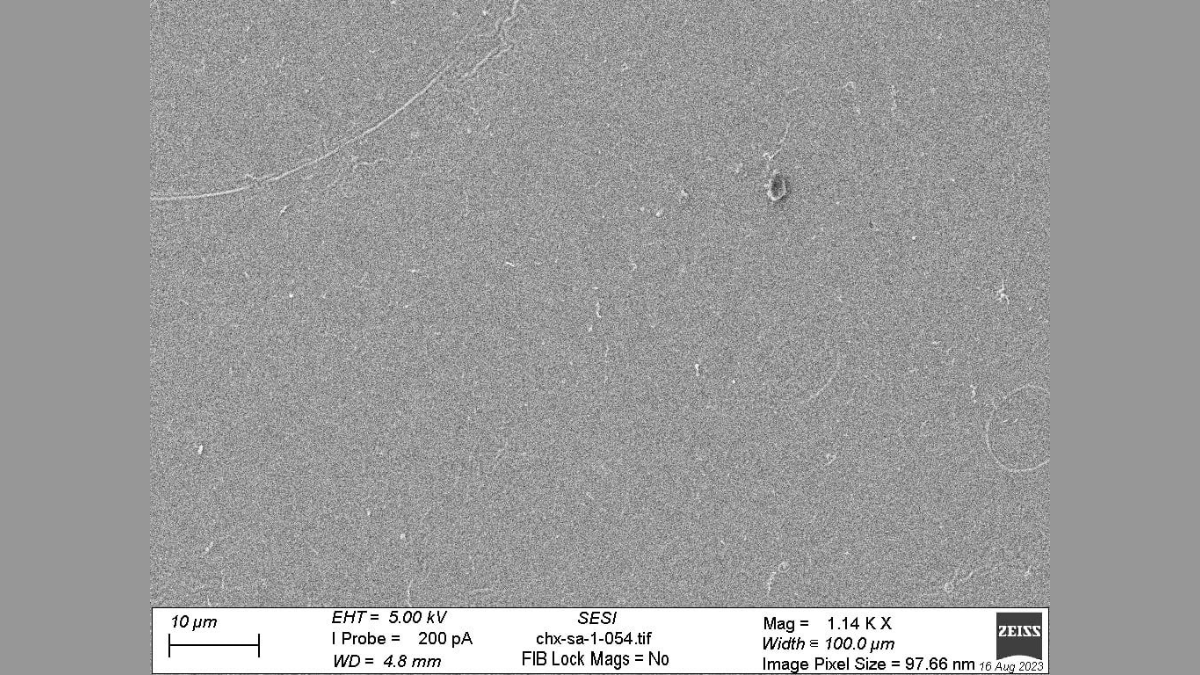
International. In collaboration with industrial paint manufacturer Indestructible Paint, researchers from the University of Nottingham's School of Pharmacy in the United Kingdom created a coating with chlorhexidine capable of killing bacteria and viruses.
This material can be used in contexts such as hospitals, public transport and public areas. It has proven its effectiveness against pathogens such as methicillin-resistant Staphylococcus aureus (MRSA), various variants of influenza viruses, and SARS-CoV-2.
The paint has an epoxygen and chlorhexidine base. Once it dries on the surface, it begins its antimicrobial and antiviral action, eradicating a diversity of microbes. It can be used on plastic surfaces and other resistant and low-porosity materials.
In hospitals, several surfaces accumulate pathogens, which favors the appearance of outbreaks of infections in hospitals. These microorganisms can survive on artificial surfaces for extended periods, even under intensive cleaning and disinfection conditions.
"In our initial research, we incorporated a disinfectant into the polymer to create a new antimicrobial paint with excellent efficacy, which also does not spread to the environment or leach from the surface when touched. This new research has shown that surfaces with this paint applied are free of bacteria, and as it dries, it becomes active. By adding this to the paint, we can create an effective coating to kill bacteria, easy to apply and cost-effective," said study leader Felicity de Kogan, associate professor in the Department of Pharmacy of Biological Medicines.
During the COVID-19 pandemic, it was estimated that 20% of hospitalized patients acquired the infection within the hospital.
In the period from 2016 to 2017, 4.7% of hospitalized adult patients contracted nosocomial infections. There were 22,800 deaths attributable to these infections, even though they could have been prevented.
Dr. Felicity de Kogan explained that materials such as plastic and metal, common in public places, can function as sources of antibiotic resistance genes. This promotes the spread of antimicrobial resistance through horizontal gene transmission between bacteria, even after rigorous cleaning.











