
 United States. Researchers at Columbia Engineering have invented a high-performance passive daytime radiant cooling polymer (PDRC) coating with nano-to-microscale air gaps that acts as a spontaneous air cooler and can be manufactured, dyed and applied as paint on rooftops and buildings, water tanks, vehicles, even spacecraft, anything that can be painted.
They used a solution-based phase inversion technique that gives the polymer a porous foam-like structure. The air gaps in the porous polymer are scattered and reflect sunlight, due to the difference in refractive index between the air voids and the surrounding polymer. The polymer turns white and therefore prevents solar heating, while its intrinsic emission causes it to efficiently lose heat to the sky.
The team: Yuan Yang, assistant professor of materials science and engineering; Nanfang Yu, associate professor of applied physics; and Jyotirmoy Mandal, lead author of the study and PhD student in Yang's group (the entire department of applied physics and applied mathematics), built on previous work that showed that simple plastics and polymers, including acrylic, silicone and PET, are an excellent heat radiator and could be used for PDRC.
The challenges were how to make these normally transparent polymers reflect sunlight without using the silver mirrors as reflectors and how to make them easily deployable.
They decided to use phase inversion because it is a simple, solution-based method for making air voids by light scattering in polymers. Polymers and solvents are already used in paints, and Columbia Engineering's method essentially replaces pigments in white paint with air gaps that reflect all wavelengths of sunlight, from UV to infrared.
"This simple but fundamental modification produces exceptional reflectance and emancipation that equals or surpasses those of modern PDRC designs, but with a comfort that is almost like paint," says Mandal.
The researchers found that the high solar reflectance of its polymer coating (R> 96%) and high thermal emission (Ɛ~97%) kept it significantly cooler than its environment under very different skies, for example, at 6°C in the warm, arid Arizona desert and 3°C in the tropical, misty environment of Bangladesh.
"The fact that cooling is achieved in desert and tropical climates, without any thermal protection or protection, demonstrates the usefulness of our design where cooling is required," Yang says.
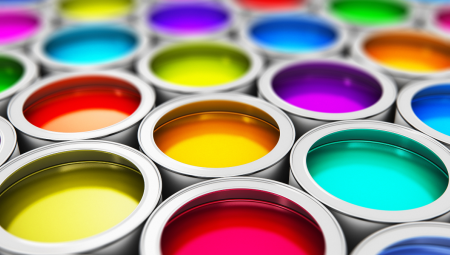
The team also created colored polymer coatings with cooling capabilities by adding dyes. "Achieving a superior balance between color and cooling performance over current paints is one of the most important aspects of our work," Yu says. "For exterior cladding, the choice of color is usually subjective, and paint manufacturers have been trying to make colored coatings, like those on ceilings, for decades."
The group took into consideration environmental and operational aspects, such as recyclability, biocompatibility and operability at high temperatures, and demonstrated that their technique can be generalized to a variety of polymers to achieve these functionalities.
"Polymers are a surprisingly diverse class of materials, and because this technique is generic, additional desirable properties can be conveniently integrated into our PDRC coatings, if suitable polymers are available," Mandal adds.
"Nature offers many ways to heat and cool, some of which are well known and widely studied and others little known. Radiative cooling, by using the sky as a heat sink, belongs to the latter group, and its potential has been strangely ignored by materials scientists until a few years ago," says Claes-Göran Granqvist, professor of physics at Uppsala University, a pioneer in the field of radiative cooling, who was not involved in the study.
Porous polymer coatings for excellent cooling
"The publication by Mandal et al. highlights the importance of radiation cooling and represents an important advance by demonstrating that hierarchical porous polymer coatings, which can be prepared economically and conveniently, provide excellent cooling even in full sunlight."
Yang, Yu and Mandal are refining their design in terms of applicability, while exploring possibilities such as the use of fully biocompatible polymers and solvents. They are in talks with the industry about next steps.
"Now is a critical time to develop promising solutions for sustainable humanity," Yang says. "This year, we witnessed heat waves and record temperatures in North America, Europe, Asia and Australia." It is essential that we find solutions to this climate challenge, and we are very excited to work on this new technology that addresses it."
Yu adds that he used to think that white was the most unattainable color: "When I studied watercolor painting years ago, white paintings were the most expensive. " White cremnitz or white lead was the choice of the great masters, including Rembrandt and Lucian Freud."
"We have now shown that white is, in fact, the most achievable color. It can be done using nothing but properly sized air voids embedded in a transparent medium. The air voids are what make the snow-white ants and the silver of the Sahara silver silver."
Source: Columbia Engineering.