
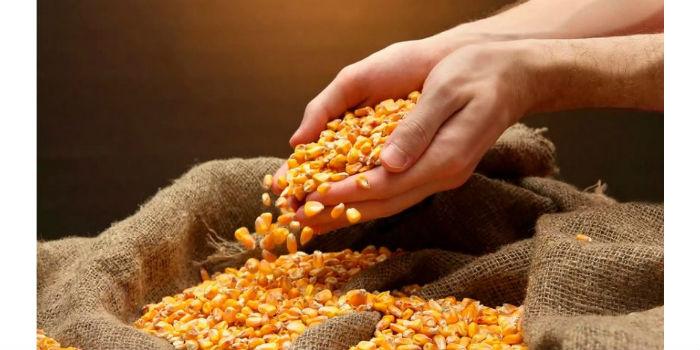
 Mexico. A scientist from the Autonomous University of Tamaulipas (UAT) patented a method for the generation of chitosan-based coatings mixed with integrated microbiological agents, to protect the seeds at the time they are deposited in the soil.
Dr. Jorge Ariel Torres Castillo explains that it is a polymer that has many applications in agriculture, medicine, in the food industry, as well as in nanomaterials.
"Specifically what we did was a coating to protect the seeds of agricultural interest, which in this case were beans and corn, so that when they reach the ground they are not susceptible to attack by pests or diseases. The biopolymer can be applied to other types of seeds."
To create the coating, the work consisted of the integration of beneficial microorganisms, including some fungi, mixed with chitosan obtained from insects. The latter is considered a biodegradable polymer, does not harm the plant, and has inhibitory effects on certain organisms that are potential plant pathogens.
"The patent that was developed is linked to a process of extraction of chitosan from insects, which can have various applications as a coating, for example, of fibers, in paints, in metals and even food."
Torres Castillo holds a PhD in Science with a specialty in Plant Biotechnology from Cinvestav, Irapuato Unit. He is currently attached to the Institute of Applied Ecology of the UAT.
For the project "Formulation of coatings from chitosan obtained from agricultural pests and filamentous fungi", the specialist received in December 2018 the Science Award "Gral. and Lic. Bernardo López García", in the category Research of Excellence, delivered by the UAT.
On the other hand, Dr. Torres Castillo points out that the project also allowed to explore an insect, called Chiva del Encino (Pterophylla beltraniy), for the extraction of chitosan and other antioxidants that could have different applications.
The insect has high amounts of protein so they consider the possibility of using it as a potential food for quail and aquaculture, even to improve feeding in humans.
"The idea is to design prototypes of foods supplemented with this insect that is very rich in antioxidants, and we want to incorporate it into a drink, a cookie and an omelette," reiterates biotechnologist Torres Castillo.
Source: Agencia ID.