
 International. Uc Santa Cruz researchers have developed safer alternatives to phthalate plasticizers used to improve the flexibility and longevity of plastics.
The problem with phthalates is that they leach from plastics into food, water and the environment, and there is growing evidence to suggest that phthalate exposure can lead to a variety of health problems.
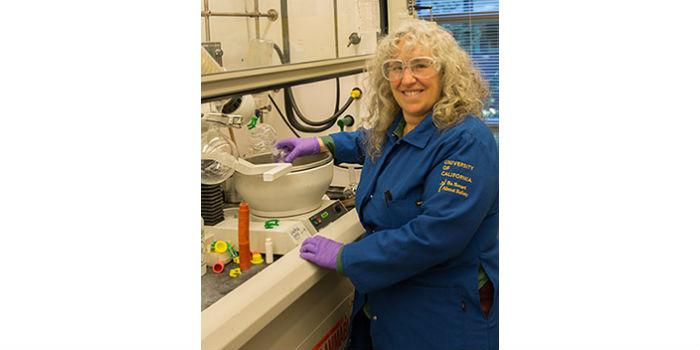
Researchers led by Rebecca Braslau, a professor of chemistry and biochemistry at UC Santa Cruz, addressed this problem by developing chemicals that are effective as plasticizers for polyvinyl chloride (PVC) but cannot leach out of PVC products because they are chemically bound to the polymer chain.
Phthalates are used in a wide variety of products, but their most widespread use is as plasticizers for PVC, one of the most common types of plastic. After polypropylene and polyethylene, PVC is the third most common plastic polymer and is used to manufacture products such as building materials, furniture, clothing, garden hoses, food containers, blood storage containers, and medical devices.
Braslau's team has been working to develop "non-migratory" plasticizers that adhere to the PVC polymer through a chemical bond and cannot leach out of the plastic. He explained that, traditionally, phthalates are mixed with fine PVC and "melted" instead of being bonded.
"Unlike phthalates, our non-migratory plasticizers cannot be physically filtered," Braslau said.
His lab has produced several viable non-migratory plasticizers, including two nicknamed the "frog" and the "tadpole" because of their chemical structures. The "tadpole" is particularly promising, Braslau said, because it's much easier to produce than the "frog" and is the most effective of the plasticization strategies examined.
"Fewer steps and fewer chemicals are involved in its synthesis. Importantly, it must be scalable for industrial use," he said.
Source: US Santa Cruz.