
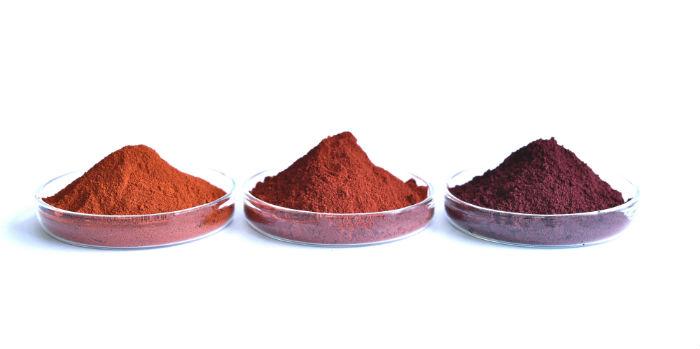
 International. Lanxess reported that it continues to optimize its global production network for the manufacture of iron oxide pigments. Through a specific "bottleneck" at the Krefeld-Uerdingen site, the specialty chemicals company has increased product availability of its micronized red pigments Bayferrox and Colortherm by more than 5,000 metric tons per year.
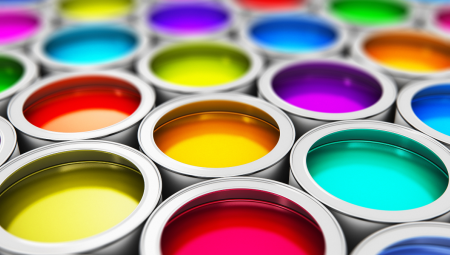
"In the paints and coatings industry and also for plastics applications, we see a continuously increasing demand for high-quality pigments that offer good dispersion characteristics. Therefore, we have increased the availability of products for our customers," says Holger Hüppeler, head of the Lanxess Inorganic Pigments business unit.
Due to their properties, Lanxess micronized iron oxide pigments are mainly used in technically demanding paints and coating systems and for coloring plastics. The micronization process is characterized by intensive grinding in which the proportion of agglomerates is significantly reduced. Micronized pigments can be dispersed more easily. In addition, they provide high color resistance and color consistency.
Unmatched properties for grinding and temperature stability
Lanxess uses its patented Laux process to manufacture the red pigments Bayferrox and Colortherm at its headquarters in Krefeld-Uerdingen, Germany. Black pigments are heated up to 800 ° C and oxidized to red pigment. Since the Copperas process, which was an alternative, is no longer used worldwide on a market-relevant scale, the much more environmentally friendly Laux process is the only production process applied for iron oxide red pigments that includes a calcination step at very high temperatures.
The company indicates that this results in particularly stable pigments that, after a subsequent grinding process, have unique properties that distinguish them from all other iron oxide pigments available on the market in two essential aspects:
The micronized red pigments from the Laux process have the highest grinding stability. Even when subjected to high shear forces during the dispersion process, they show excellent resistance to color change.
These types of pigments also conduct in terms of temperature stability. They are thermally stable even at temperatures of 800 ° C, while red pigments (hematite, Fe2O3) produced by other manufacturing processes are usually only resistant up to a maximum of 400 ° C. Due to the high temperatures applied during calcination in the Laux process, all water inclusions that can promote a color change are displaced from the oxide crystal lattice. For this reason, Lanxess micronized red pigments do not show a color change in use, even at extremely high application temperatures.