
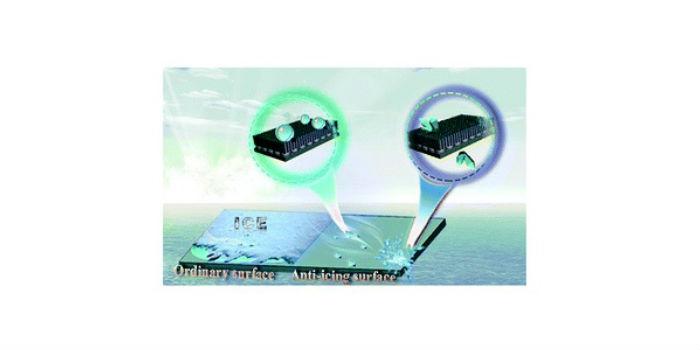
 International. In a new paper, Chinese scientists discussed the fundamentals of ice formation and common strategies for designing anti-icing biomimetic surfaces.
The accumulation of ice on solid surfaces can lead to unrecoverable losses and catastrophic issues in everyday life. These problems can be addressed and alleviated strategically by adopting effective remediation methods. Compared to conventional active thawing strategies such as electro-propulsion, the chemical method and the mechanical thawing approach, passive anti-ice surfaces and ice phobias inspired by animals in nature and plants can confer an extremely profound advantage.
In this paper, we investigated the kinetics of ice nucleation, ice accumulation on solid surfaces, and heat transformation during ice formation. Next, the reduced fixation pathway of the water droplets on the substrate surfaces is reviewed in order to achieve the self-retraction of the water droplets and avoid the transition of wettability on superhydrophobic surfaces. In addition, recent antifreeze biomimetic strategies regarding reduced ice adhesion, decreased ice nucleation temperature, and delayed freezing time were considered.
Significantly, other external factors that affect ice formation and growth, such as ambient humidity and exoteric gas flow, are being thoroughly discussed. Finally, excellent mechanical and chemical stability is vital to lengthen the durability and longevity of antifreeze/ice-phobic surfaces. The article discusses all these issues along with the prospects for future research directions for antifreeze and ice surfaces.
Source: Journal of Materials Chemistry.