
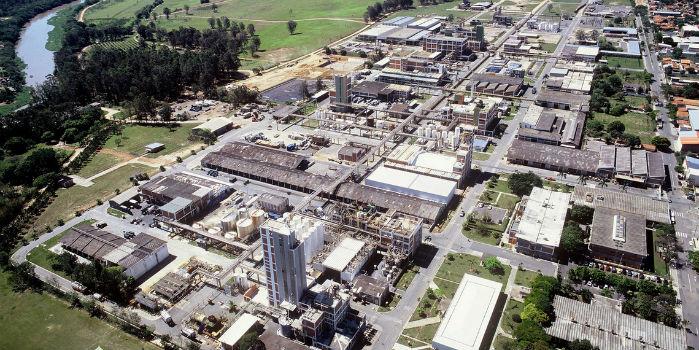
 Brazil. BASF recently received ISO 50001 certification in all operations of the Guaratinguetá Chemical Complex, a municipality in the state of São Paulo.
Having been the first chemical industry in Brazil to receive international ISO 50001 certification for three plants in 2017, BASF now receives the same certification for all production units of the Guaratinguetá Chemical Complex, including the infrastructure and logistics areas.
This achievement indicates that BASF has significantly improved its energy performance, including efficiency, use and consumption. ISO 50001 helps companies to establish more efficient and modern practices in relation to energy management and is one of the most important in the energy segment.
The Triple E (Excellence in Energy Efficiency) project is primarily responsible for improving energy efficiency indicators at BASF. Initiated at the Guaratinguetá Chemical Complex in December 2015, in partnership with Unesp, the project aimed to improve energy and sustainability indices, as well as increase the company's competitiveness in South America.
"The achievement of ISO 50001 certification in all the production units of the Guaratinguetá Chemical Complex is a source of pride for us, as it represents our focus on continuous improvement. The measures implemented during the certification process will promote very positive results and demonstrate our focus on sustainability and innovation," said Patrick Silva, BASF's Director of Infrastructure for South America and the Guaratinguetá Chemical Complex.
Examples of the initiatives implemented by the Triple E project include the adequacy of condensate return for steam boilers, the optimization of extraction systems, the automation of valves, and the optimization of pumping systems. In addition, measures such as the optimization of cooling water systems and the installation of new heat exchangers for water heating systems that reduce energy losses, such as natural gas for steam generation and the improvement of cogeneration of electrical energy of the site, were implemented.
The expected results with the implementation of these and other Triple E initiatives in the Guaratinguetá unit, 74 in total, are the reduction of greenhouse gas emissions (CO2 eq) by 3070 tons / year, reduction in primary energy consumption internally by 19,300 MWh / year, and cost reduction by R$9.0 million. The Triple E project is also underway in the Demarchi, Jacareí, and Indaiatuba units in Brazil and in General Lagos, Argentina. The area still foresees the implementation of the units of Camaçari, in Bahia, and Concón, in Chile.