
 International. Recently, scientists in China developed a biomimetic hierarchical structure with a hydrophilic surface and a hydrophobic subsurface built from water-based polyurethanes containing a self-assembled peptide extender.
The study says that building a biomimetic hierarchical structure is of great benefit to achieve materials with a high expected performance. In a recently published paper, a new peptide extender (PPE) based on Fmoc-diphenylalanine (Fmoc-FF) is synthesized to prepare a series of water-based polyurethanes (WPU) to build a hydrophilic surface and a hydrophobic subsurface.
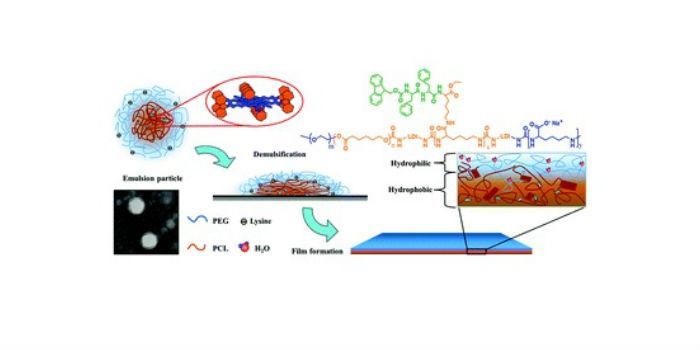
A pre-assembly structure of the WPU emulsion particle is achieved by introducing PPE. It has a compact core consisting of hydrophobic segments of Fmoc-FF with stacking π-π and a loose shell consisting of hydrophilic polyethylene glycol (PEG) segments.
The self-assembled Fmoc-FF could also improve phase separation between soft and hard segments. During the formation of the film by demulsification, the external PEG segments migrate easily to the surface and the hydrophobic compact nuclei are added to the subsurface. Such an architecture endows WPU films with simultaneous biocompatibility, antifouling capacity and water resistance in wet conditions. The work provides new insight into the design of a polymer emulsion with a pre-assembled phase to build the expected hierarchical structure of films or coatings for biomaterials and antifouling materials.
Source: Journal of Materials Chemistry B.