
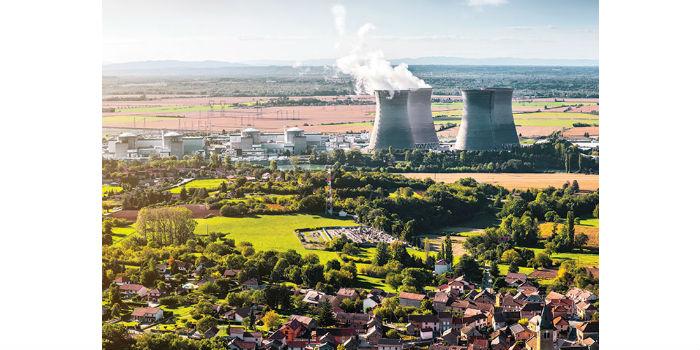
 International. ASTM International's Committee on Nuclear Technology and Applications (E10) has created new specifications for coatings that help prevent the release of radioactive particles when nuclear facilities are being decommissioned.
The specifications are intended to immobilize radioactive contamination, minimize worker exposure and protect uncontaminated areas against the spread of radioactive contamination.
The first specification is for a coating that is intended to be removed during subsequent decontamination operations: Specification for removable and removable coatings to mitigate the spread of radioactive contamination (E3104).
The second specification is for a coating intended to be a permanent, non-removable, long-term material to fix contamination in place during decommissioning: Specification for permanent coatings used to mitigate the spread of radioactive contamination (E3105).
The coatings are applied to surfaces commonly found in nuclear facilities and aim to reduce:
- Migration of pollution on or along buildings, equipment and other surfaces;
- Resuspension of air pollution; and
- The spread of pollution as a result of external forces such as foot traffic and fire.
"These standards, and the test protocols our committee is developing, can help update directives and guidance documents, such as U.S. Department of Energy manuals on airborne release fractions and respirable fractions for non-reactive nuclear facilities," said Joseph Sinicrope, Center for Applied Research at International University. Sinicrope also serves as chair of the ASTM International subcommittee on radiation protection for the decontamination and decommissioning of nuclear facilities and components (E10.03).
Source: ASTM.