
 United States. Researchers at the National Institute of Standards and Technology (NIST) developed bio-based fire-retardant coatings.
The NIST team prepared nine water-based mixtures made up of various combinations of potato starch, algae gel (agar), clay and similar everyday compounds. In laboratory tests, six of these "bioinspired" coatings reduced the heat release range – a measure of flammability – of polyurethane foam by at least 63%, compared to untreated foam.
Encouraged by the lab results, the team subjected the mixture of high-performance starch and a boron-containing compound used in deodorants and other products to a large-scale fire test. That involves turning on the seat cushions of entire chairs padded with treated or untreated polyurethane foam.
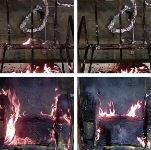
The untreated chair, upholstered with a synthetic fabric, was completely engulfed in flames 90 seconds after ignition and was completely consumed in less than two minutes.
In contrast, the fire in the chair treated with NIST-devised coating remained confined to the mattress 90 seconds after ignition, even though the fabric cover had completely burned. The researchers recorded a 71% drop in the total amount of heat released, so combustion could not be sustained and the flames did not spread.
The most recent coatings were handmade with what the researchers call a "one-pot" process: adding ingredients to water, heating, stirring until the solution became a gel, and then cooling. Depending on the ingredients, preparation times ranged from about 30 minutes to two hours.
To achieve uniform coverage, the foam is immersed in the solution for two minutes.
The hassle-free process could lend itself to industry adoption. However, further research is needed to determine the durability of new coatings and evaluate other properties that affect performance and manufacturing applications.