
 Spain. The company Adapta, with the financial support of the Center for Technological Development, has concluded a research project aimed at obtaining powder paint with insect repellent through processes that involve the production and application specially designed to preserve the activity of these repellent substances.
The characterization of materials by means of thermogravimetry, infrared spectroscopy and chromatographic analysis of the final products, results in the confirmation of the existence of a high percentage of repellent substance. In turn, a procedure has been developed for the selective extraction of insecticides that allows the optimization of the chromatographic analysis method.
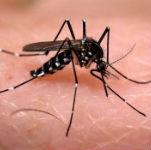
The powder coating obtained has been tested by a prestigious specialized laboratory, and registered an efficacy of 62% against the Aedes aegypti mosquito. This mosquito is a carrier of yellow fever and dengue viruses.
The repellent effect on the materials could last up to two years. In the case of powder coatings, it has been shown that the kinetic release model followed by coatings is of the first order, which is why a repellent activity greater than two years is foreseeable.
One of the possible practical uses of this painting is in garden furniture, which is why it has been developed with outdoor qualities and in a bright white color. Initially, the product has no limitations regarding the production of other qualities, colors or finishes. The coating does not release odor and does not contain active substances that can be toxic to humans, and no systemic health effects have been reported. It has been shown that the paint does not suffer any significant loss of the active substance when subjected to normal cleaning operations.
The tests were carried out in accordance with the methodologies used by the international agencies WHO, Guidelines for Testing the Effectiveness of Space Repellents and Technical Notes for Guidance by the European Commission. Based on the results obtained and the information contained in the scientific literature, the painting presents repellent activity. This activity could be improved by increasing the percentage of active substance to the maximum concentration limits published by the Department of Defense in Insect Repellents: Principles, Methods and Uses.