
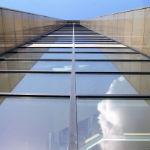
 China. A research consortium led by the East China University of Science and Technology is investigating several options for the development of smart windows. Scientists are looking for various triggers, such as electricity, light, heat and gas to cause a change of state in the crystal.
Researchers are creating a heat-activated gel that becomes opaque when temperatures reach a defined level. The white opaque glass allows light to penetrate, but limits heat penetration. Once the temperature drops, the glass returns to its original transparent state.
The hydrogel solution suspends the thermosensitive microscopic grains in a liquid within a solvent-based alcohol and water. The hydrogel was sandwiched between two pieces of glass and tested in a specially built house to find out how it works under test conditions.
The results have been very encouraging with the microgel demonstrating short response times, a low freezing point and moderate evaporation rates. By limiting the excess heat generated through solar gains the technology has the potential to reduce the need for energy-intensive air conditioning systems while also addressing the very real effects that overheating has on the well-being of building occupants.
The research published in Industrial and Chemical Engineering Research is based on previous research in the field of developing a better performing solution.