
 International. Researchers at Imperial College London in the UK have developed a new method of chemical reduction.
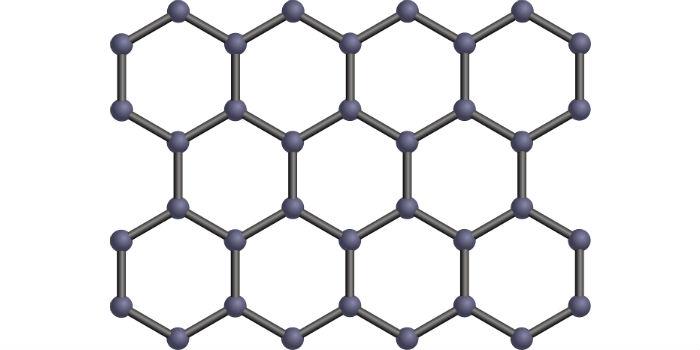
The researchers used a versatile, non-destructive chemical reduction method to dissolve and subsequently brominate sheets of low-layer graphene (FLG); the direct covalent binding of bromine to the graphene frame was demonstrated by X-ray photoelectron spectroscopy (XPS).
Brominated few-layer graphenes (FLG-Br) provide a convenient and stable liquid phase precursor, suitable for the synthesis of a variety of directly functionalized graphene. As an example, FLG-Br species were used to initiate radical polymerization by atomic transfer (ATRP), to obtain poly (methyl methacrylate) (PMMA), grafted graphene (FLG-PMMA), which was six times more dispersible in acetone than controls.
In addition, FLG-Br are active for nucleophilic substitution reactions, as illustrated by the preparation of methoxypolyethylene glycol (mPEG) – and derivatives substituted with OH. The products were characterized by thermogravimetric analysis coupled with mass spectrometry (TGA-MS), XPS spectroscopy and Raman. Graft ratios (GR) for these polymer-grafted materials ranged from 6 to 25%; even at these GR, all graphene derivatives showed increased solubility in organic solvents.
Source: Imperial College London.