
 Brazil. Researchers from the Federal University of Rio Grande do Sul have been developing different more ecological alternatives for intumescent coatings , which are well known to be responsible for protecting steel structures against fire due to the formation of a protective carbonaceous layer. However, one of the main components of these systems is carbon, which usually comes from non-renewable sources.
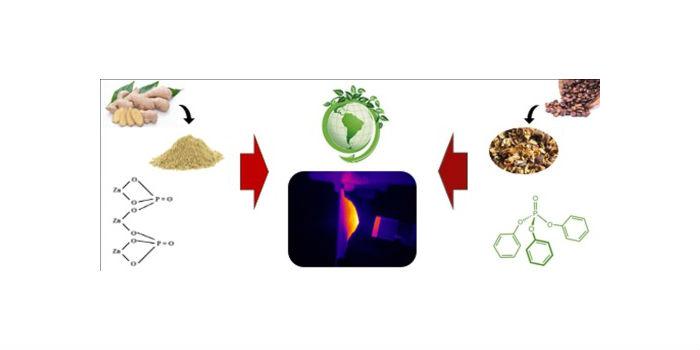
In this work, epoxy resin coatings were prepared with plant compounds (ginger powder and coffee peel) to act as a carbon source in the intumescent system. In addition, the possibility of using zinc phosphate (ZnP) and triphenylphosphate (TPP) as flame retardants has been verified.
The characterization of the coatings was carried out through a fire resistance test, thermogravimetric analysis (TGA), Fourier transform infrared (FTIR), X-ray diffraction (XRD) and mass spectrometry by pyrolysis gas chromatography (Py-GC-MS).
Both plant compounds showed potential for application as a carbon source, decreasing the temperature of the substrate compared to the white condition. Coatings containing TPP show better behavior as flame retardants and better expansion than ZnP. The Py-GC-MS analysis shows the absence of toxic gases such as CN- and phosphine.
Source: www.sciencedirect.com