
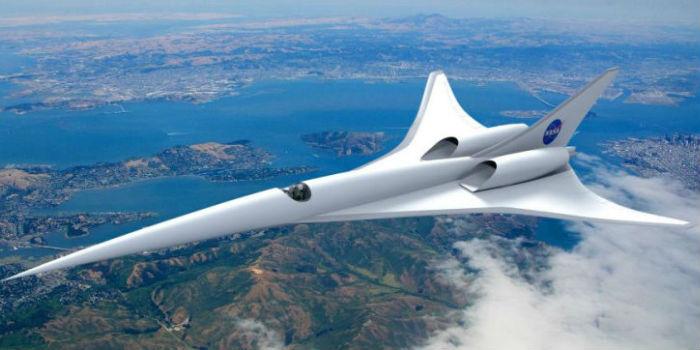
 International. Researchers at the University of Manchester, in collaboration with the Central University of South (CSU), China, have created a new type of ceramic coating that could revolutionise hypersonic travel for air, space and defence purposes.
Researchers have designed and manufactured a new carbide coating that is far superior in resistance to temperatures up to 3,000°C, compared to current ultra-high temperature ceramics (UHTCs).
Hypersonic travel means moving at Mach five or more, which is at least five times faster than the speed of sound. Moving at such a speed, the heat generated by air and gas in the atmosphere is extremely hot and can have a serious impact on the structural integrity of an aircraft or projectile.
The new carbide coating is being shown to be 12 times better than the conventional UHTC, zirconium carbide (ZrC). The improved performance of the coating is due to its unique structure and characteristics.
It provides extremely good heat resistance and massively improved oxidation resistance. The coating is done using a process called reactive fusion infiltration (RMI), which drastically reduces the time needed to manufacture such materials, and has been reinforced with the carbon-carbon compound (C/C compound). The process makes it strong and extremely resistant to the usual surface degradation.
Data Source Provider: University of Manchester.