
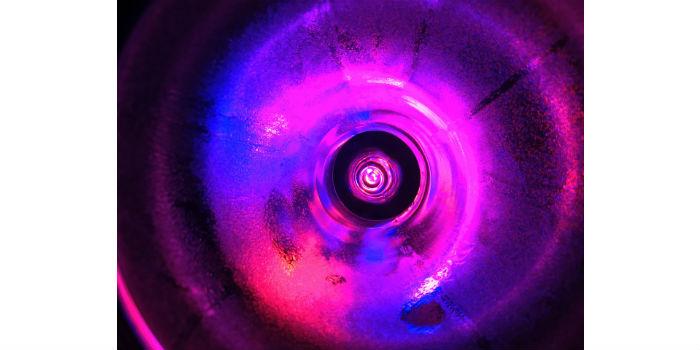
 International. A new study investigates the film quality of electron beam curable varnish coatings on polymer tissue substrates. Properties were found to be affected by monomer level, EB dose and EB current. Also, some cross-linked surfactants improved properties.
Polymer fabrics are important substrates for all kinds of flexible applications such as food packaging, decorative products and flexible electronics. If the polymer fabric is intended to be coated with functional thin films, which are deposited by chemical or physical vapor phase deposition (CVD, PVD) techniques, the surface of the polymer films must be smooth and free of defects.
Scientists at the Fraunhofer Institute for Organic Electrons, Electronic Ray and Plasma Technology investigated a formulation consisting of an aliphatic diacrylate urethane and 1,6 hexanediol diacrylate (HDDA) oligomer in different proportions. Different surface additives were also examined. The varnishes were also cured by EB with different parameters.
They found that the arithmetic mean surface roughness and fractional defect area increased with increasing monomer content in the formulation. Also the area of the fractional defect increases with the increasing dose of the electron beam. However, a high electron beam current and therefore a high speed of movement in a line leads to a lower fractional defect area.
In addition, certain surfactants, designed to reticular in the film, could also decrease the area of fractional defect.
Source: Fraunhofer Institute for Organic Electrons, Electron Beam and Plasma Technology.