
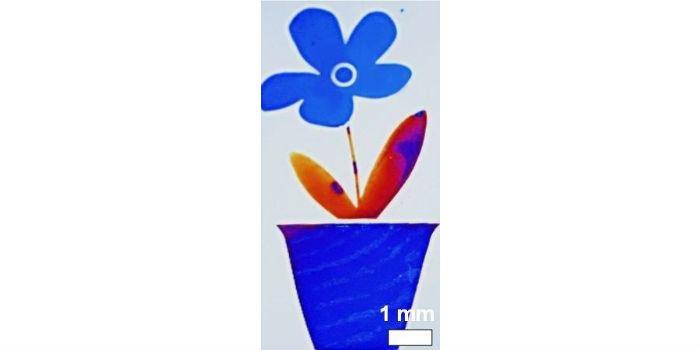
 International. Inspired by the various colors that shine outside of beetle shells, scientists have developed color-changing nanoparticles, which can change hue even after being embedded in a material. This technique could lead to the production of easier-to-read sensors and anti-tampering labels.
The shells, or exoskeletons, of beetles are covered with heaps of crystalline shapes that scatter light and produce dazzling colors. In some cases, these colors can change with only a slight change in the viewing angle. Known as structural colors, scientists have been interested in replicating them for use in paints, inks, cosmetics and other products.
But unlike many pigments, structural colors resist fading. However, the current techniques used to integrate structural colors into materials are laborious and expensive. And once they are attached to a surface, it is difficult to modify them. Geon Hwee Kim, Taechang An and Geunbae Lim sought to overcome these challenges.
The researchers used a process called hydrothermal growth to synthesize zinc oxide nanostructures in water from 40 to 80 degrees Celsius. This technique produced the tiny particles quickly and easily.
The method also allowed them to better control the size and separation of nanostructures, a key step in being able to adjust colors as needed within a material or fabric. The researchers conclude that this new technique could have broad applications, including manufacturing microelectrodes for use in sensors.
Source: American Chemical Society.